Acting CDC Director Dr. Jay Bhattacharya stammered his way through an interview in which he sought to reassure the public that the agency is on top of a recent hantavirus outbreak.
Bhattacharya spoke to Jake Tapper on State of the Union on Sunday as 17 American passengers from the hantavirus-hit MV Hondius prepared to return home following eight reported infections onboard, including three deaths.
“The latest is we are on the ground, the boat has landed—I think—at the Canary Islands," he said.
Bhattacharya—who also directs the NIH—brushed off concerns about the CDC’s preparedness to deal with dangerous outbreaks in light of the agency’s gutted staff. “I’ve been so impressed by the professionalism of the people that are there, especially the disease outbreak people,” he said.
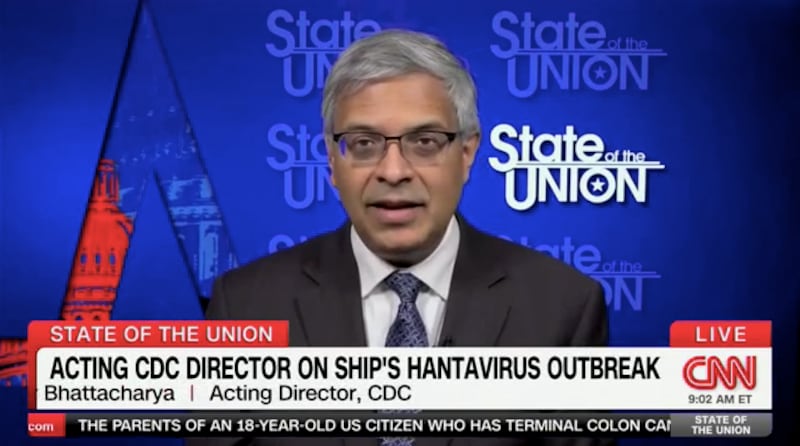
He went on to say the CDC had been coordinating with the states and the World Health Organization—of which the U.S. is no longer a part—for “the last couple of weeks, week and a half...at least a week and a half or so...longer.”
The physician shared that MV Hondius travelers will be monitored at a “fantastic” facility in Nebraska, where he said they will be “interviewed” to assess their risk level.
Asked by host Jake Tapper about the practicalities of the risk assessment, Bhattacharya clarified that people deemed safe enough will be “offered alternatives” to the Nebraskan site.
“It will include, uh, you know, uh, you know, advice given to these patients—uh, not patients! These travelers,” he said.
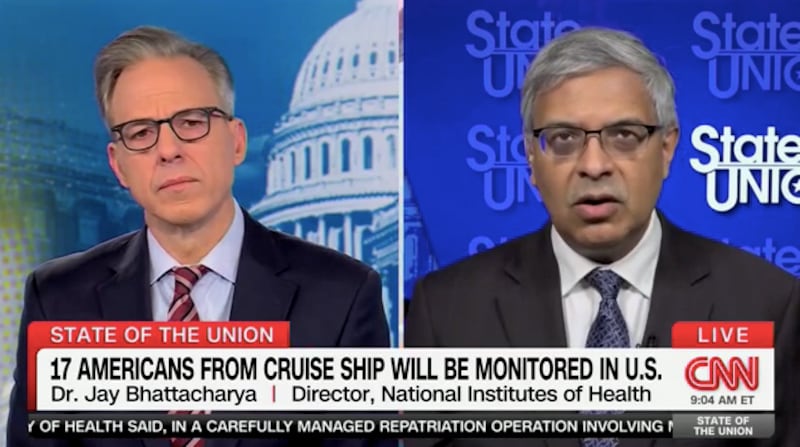
Bhattacharya outlined that the cruise passengers would be offered a staycation in Nebraska, “Or, you know, if they want to go back home and their home situation allows it, to safely fly them home without exposing other people on the way.”
Those who choose to shoot back home will then be under the eye of their state public health agencies, he said, “with the CDC support all the way.”
Tapper then asked about the seven MV Hondius passengers already home, noting that it can take up to six weeks after exposure for hantavirus symptoms to emerge.

Bhattacharya stumbled over his words when questioned about how the seven are monitored, or if any are yet showing symptoms four weeks on.
“Well, I think it’s, uh, we first learned about the CDC roughly, uh, the time they started to come home,” he said, apparently tripping over his own words. “I think maybe three weeks ago. I don’t know what the exact dates are, Jake.”
Despite having had some difficulties specifying clear timeframes throughout his interview, Bhattacharya assured that the CDC had been “tracking this situation for a while now.”
He added that “it’s been basically the whole time I think.”
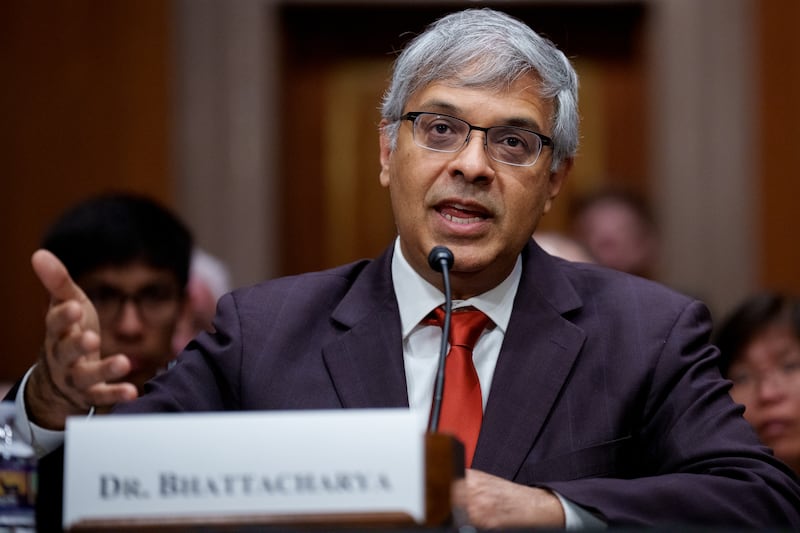
“It’s been interesting to watch,” he said of concerns from the American public and global health bodies, asserting that the coronavirus pandemic “experience” was skewing opinion on “normal hantavirus protocols.”
Bhattacharya—who opposed face masks and lockdowns during COVID-19 while proposing its natural spread among the healthy as “focused protection”—has been the acting CDC director since February.
Trump’s next pick for CDC boss, Dr. Erica Schwartz, was tapped in April and is awaiting her confirmation hearing. Schwartz began her career as a physician in the military and became the Coast Guard’s principal expert on flu pandemics, before being appointed Deputy Surgeon General in January 2019.