
Treasury Secretary Scott Bessent was berated by his British counterpart, U.K. Chancellor Rachel Reeves, during a confrontation over her sharp criticism of the war in Iran, according to a report.
The pair got into a heated exchange while Reeves was in Washington, D.C., in April to attend the spring meetings of the International Monetary Fund (IMF).
Speaking at CNBC’s Invest in America forum, Reeves blasted Donald Trump’s war in Iran as a “mistake” with no clear objectives or endgame. She also dismissed the idea that the Middle East conflict means “we are safer today than we were a few weeks ago.”
Bessent later confronted Reeves over her comments that same day, the Financial Times reported. He argued the war is making the world safer by aiming to prevent Iran from obtaining a nuclear weapon, and pressed her on what would happen if Tehran carried out a nuclear attack on London.
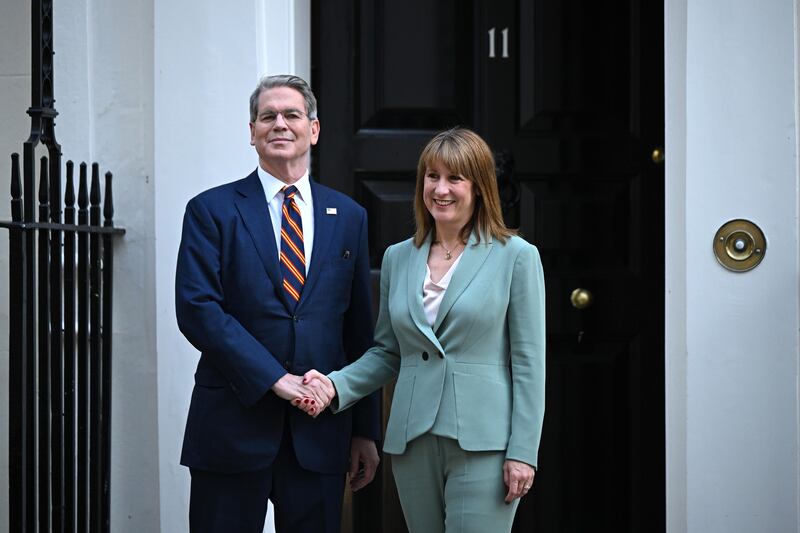
Reeves reportedly then “responded angrily” to Bessent’s comments and said he did not like the way he was speaking to her. Reeves also reminded Bessent that she did not work for him and reiterated her sharp criticisms of the war in Iran.
The U.K. is among the top U.S. allies that have refused to be dragged into the Middle East conflict or assist Trump’s efforts to reopen the Strait of Hormuz.

Just like in the U.S., the closure of the narrow shipping route has sent gas prices soaring in the U.K. In an interview last month, British Prime Minister Keir Starmer said he was “fed up” that the actions of Trump in Iran and Russian President Vladimir Putin in Ukraine were driving up energy bills for British families.
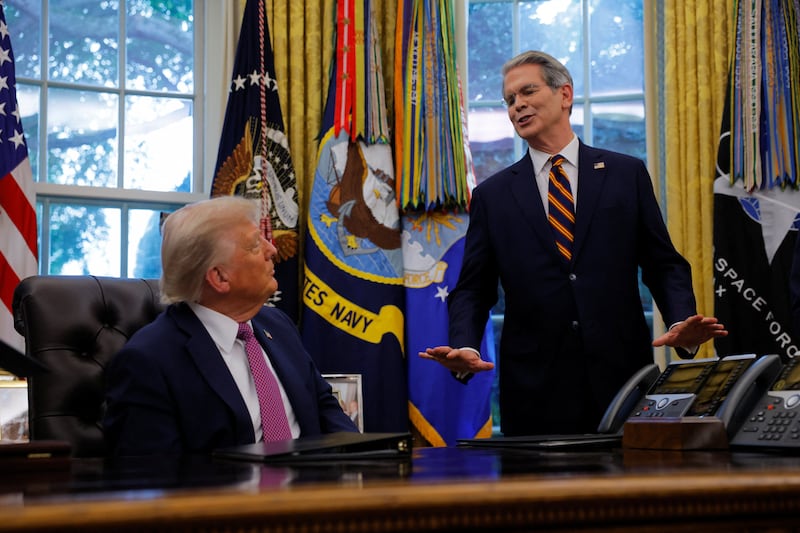
Days later, Bessent told the BBC that the U.K. would have to accept a “small bit of economic pain” while Trump continues his war.
“I wonder what the hit to global GDP would be if a nuclear weapon hit London,” Bessent said. “I am less concerned about short-term forecasts than long-term security.”
Bessent and Reeves have spoken since the fiery argument last month, but Reeves has continued to criticize the war.
“Rachel has been frank—in private and in public—about the mistakes of the war and the economic cost,” an unnamed U.K. official told the Financial Times.
The conflict is just as unpopular across the pond as it is in the U.S. An Ipsos poll conducted in early April found that 65 percent of the British public disapprove of the war.
A vast majority also expressed concern about its impact on fuel and energy prices (86 percent) in the U.K., and the broader economy (85 percent).
The Daily Beast has contacted the Department of the Treasury for comment.