Donald Trump’s sweeping tariffs forced mid-sized U.S. companies to pass on the costs to American consumers, according to a damning report.
Analysis from the JPMorganChase Institute found that the amount of tariffs paid by mid-sized businesses has more than tripled since early 2025.
As a result, midsized companies—who employ around 48 million workers in the U.S. and generate roughly one-third of private-sector gross domestic product (GDP)—have had to absorb the costs in other ways, such as raising prices or accepting lower profits, the Associated Press reported.
“That’s a big change in their cost of doing business,” said Chi Mac, executive director at the JPMorganChase Institute and one of the authors of the report. “We also see some indications that they may be shifting away from transacting with China and maybe toward some other regions in Asia.”
The JPMorganChase Institute said analyzing how middle-market businesses—which have annual revenues from $100 million to $1 billion and fewer than 500 employees—are affected by tariffs is vital. Even though these companies are “highly involved in trade,” they are often “underrepresented in policy discussions and aggregate statistics.”
As noted by the Financial Times, these companies, which often lack leverage over suppliers, were forced to continue buying foreign imports in 2025 even as duty payments rose 316 percent above their pre-election level.

“They may be large enough to be local or regional anchors but not so large that they can easily offset losses in one area with gains in another,” the report states. “When responding to changes in trade policy, they may be more agile than larger firms but lack the negotiating leverage of their larger counterparts. In this way, they may be more representative of the typical U.S. firm.”
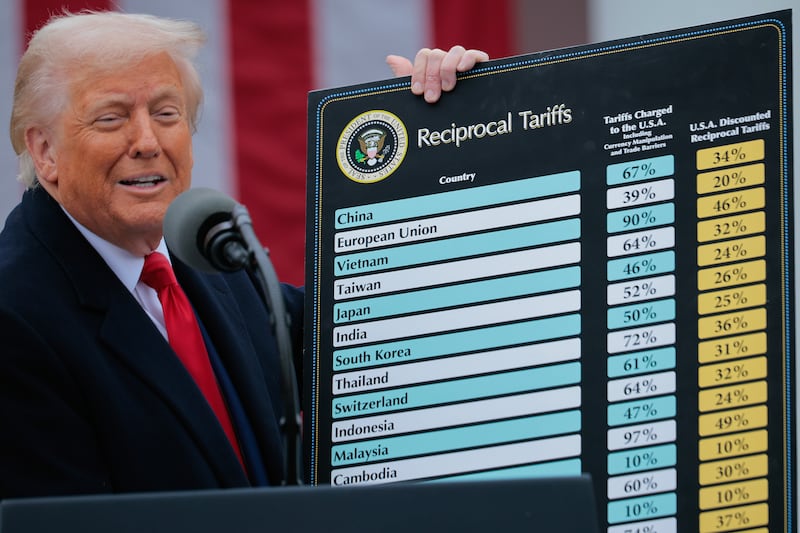
The findings are the latest blow to Trump’s claim that his “Liberation Day” tariffs will largely be absorbed by overseas companies rather than passed on to U.S. consumers. The report also highlights continuing concerns about how Trump’s tariffs are affecting the U.S. economy and Americans’ financial situations.
Last week, a report from the Federal Reserve Bank of New York estimated that roughly 90 percent of tariff costs are being passed on to U.S. consumers and businesses, rather than foreign exporters.
The finding prompted a sharp response from White House economic adviser Kevin Hassett, who claimed the paper was an “embarrassment.”
“It’s the worst paper I’ve ever seen in the history of the Federal Reserve System. The people associated with this paper should presumably be disciplined,” Hassett told CNBC’s Squawk Box. “Because what they’ve done is they’ve put out a conclusion which has created a lot of news that’s highly partisan based on analysis that wouldn’t be accepted in a first-semester econ class.”
Trump’s vow to lower the cost of food and everyday items was considered crucial to his 2024 election victory. The 79-year-old has recorded dire approval ratings for months, with his handling of the U.S. economy cited as a major concern among voters.
The Daily Beast has contacted the White House for comment.