A top ally of ousted Homeland Security chief Kristi Noem decisively lost the Republican primary for a battleground congressional seat in Ohio on Tuesday.
Madison Sheahan, 29, quit as deputy director of ICE in January, when the agency was roiled in controversy after ICE agent Jonathan Ross shot and killed unarmed mother Renee Nicole Good in Minneapolis. Upon Sheahan’s exit, Noem said confidently that she would be “a great defender of freedom when she goes to Congress.”
Not so fast, voters said.

According to the Associated Press, Sheahan came third of the five major GOP candidates running to represent Ohio’s 9th Congressional District, which covers the northwest part of the state and includes the Lake Erie cities of Toledo and Sandusky.
With 89 percent of the votes in as of publication, Sheahan garnered 20.3 percent. Runner-up Josh Williams had over 25 percent, while Derek Merrin won with over 43 percent of the vote.
Merrin now has a rematch against Democratic incumbent Marcy Kaptur, who narrowly beat him in 2024 by about 2,400 votes. That same year, her district went for Donald Trump, and in October 2025, the GOP-controlled Ohio legislature redrew the district in their favor, making it likely one of the most competitive midterm races this cycle.
Sheahan, who pitched herself to her potential constituents as a “Trump conservative running for Congress to protect American jobs, American paychecks, and American values,” seemed to blame her loss on her relatively late entry in the race rather than connection to ICE.
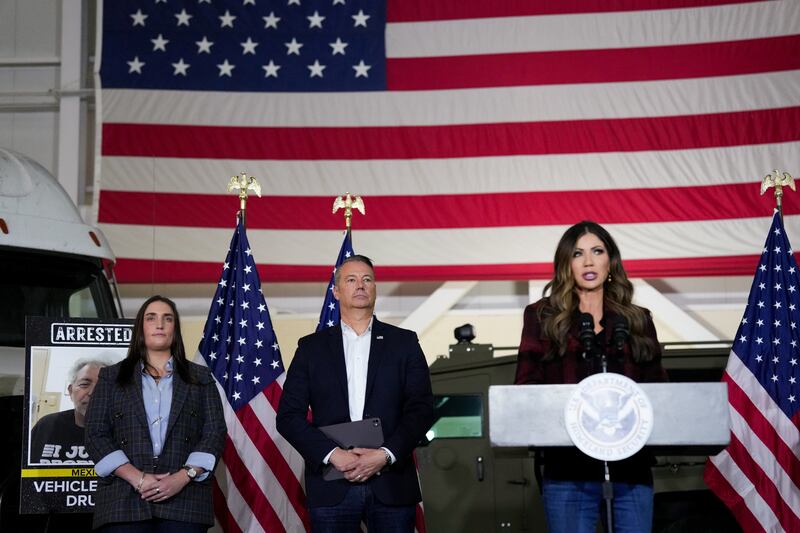
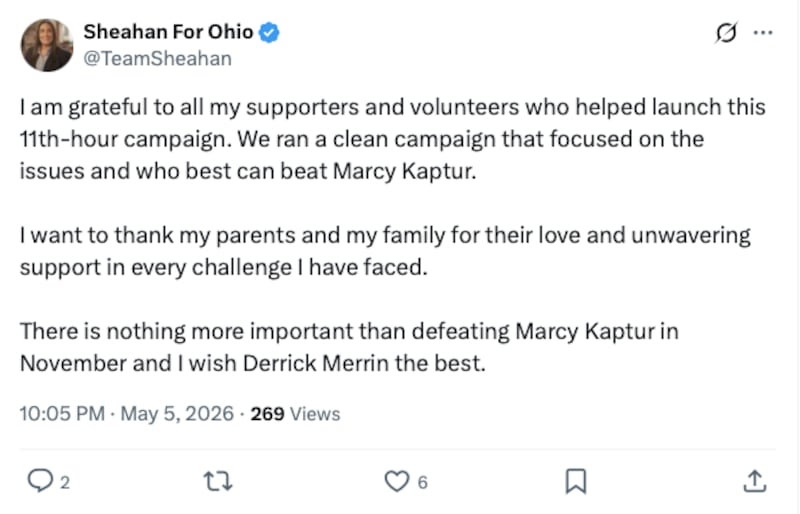
“I am grateful to all my supporters and volunteers who helped launch this 11th-hour campaign,” she wrote on X.
“We ran a clean campaign that focused on the issues and who best can beat Marcy Kaptur. I want to thank my parents and my family for their love and unwavering support in every challenge I have faced. There is nothing more important than defeating Marcy Kaptur in November and I wish Derrick Merrin the best.”
Donald Trump did not make an endorsement in the race, but he did support Merrin in 2024—a point that Merrin emphasized in ads in the final days of the campaign.