A federal judge has admonished the Pentagon for defying his previous court order, issuing a humiliating ruling against Secretary of Defense Pete Hegseth.
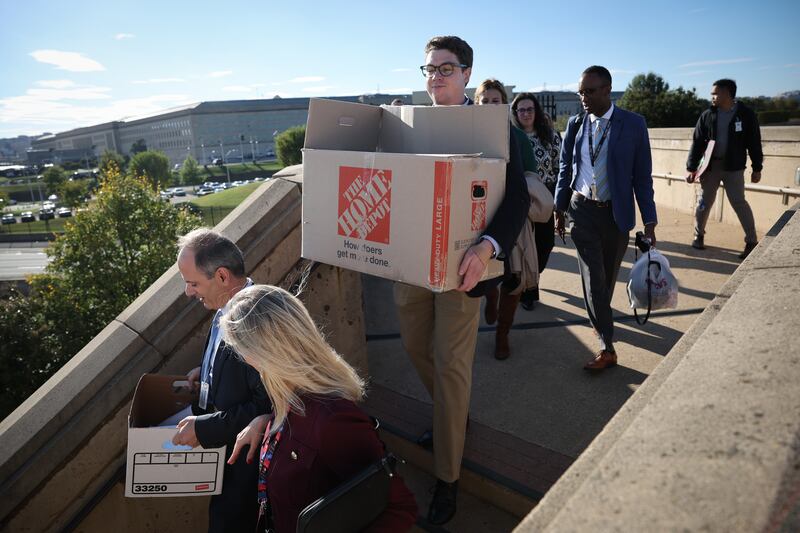
Hegseth, 45, announced strict new rules last October that allowed the Pentagon to revoke journalists’ press passes. Under the revised rules, journalists would be allowed access to the Pentagon only with government escorts and would be moved from a dedicated workspace inside the building to an external library. Many news outlets surrendered their passes rather than agreeing to Hegseth’s demands.
The New York Times journalist Julian E. Barnes filed a lawsuit in December that claimed Hegseth’s selective media policy violated the First Amendment, Fifth Amendment, and due process provision of the Constitution.
Last month, Friedman agreed with the publication that the policy did violate the First Amendment. He overruled some of Hegseth’s key restrictions on the media, including one provision that said journalists who “solicit” classified or sensitive information from military staff could be deemed a security risk and have their press pass revoked.
The judge also struck off a section in Hegseth’s changes that referred to access to the Pentagon as a “privilege,” not a “right.” Friedman had ruled that while the court understood the importance of national security, “it is more important than ever that the public have access to information from a variety of perspectives about what its government is doing.”
That March 20 ruling forced the Pentagon to release a “revised” press policy three days later, which was met with as much criticism as the original.

On Thursday, Friedman ruled that the Pentagon had failed to comply with his March orders and said the revised policy had new wording but remained unlawful.
Friedman’s ruling also addressed the Pentagon’s “inducement of unauthorized disclosure” provision, which attempted to restrict journalists from soliciting information, classified or unclassified, that was not approved for release.
The judge said the Pentagon’s revision on the issue was still unconstitutionally vague.
“The Department cannot simply reinstate an unlawful policy under the guise of taking ‘new’ action and expect the Court to look the other way,” Friedman wrote. “Nor can the Department take steps to circumvent the Court’s injunction and expect the Court to turn a blind eye.”
Friedman ordered the Pentagon to return the credentials of seven reporters from the Times and said the closure of the “Correspondents’ Corridor” workspace inside the Pentagon, along with Hegseth’s insistence on journalistic access only with escorts, were “not security measures” but rather “transparent attempts to negate the impact of this court’s order.”

“The court has no choice but to conclude that the Department’s abrupt closure of the Correspondents’ Corridor and its ban on credentialed journalists traveling unescorted through the Pentagon are not security measures or efforts to make good on prior commitments but rather transparent attempts to negate the impact of this court’s order,” Friedman wrote in his ruling Thursday.
The judge’s fiery ruling also aimed a personal salvo at Hegseth.
“The Court cannot conclude this Opinion without noting once again what this case is really about: the attempt by the Secretary of Defense to dictate the information received by the American people, to control the message so that the public hears and sees only what the Secretary and the Trump Administration want them to hear and see,” Friedman said. “The Constitution demands better. The American public demands better, too.”
The judge, who was appointed by former President Bill Clinton, continued: “The curtailment of First Amendment rights is dangerous at any time, and even more so in a time of war. Suppression of political speech is the mark of an autocracy, not a democracy — as the Framers recognized when they drafted the First Amendment.”
A spokesperson for The New York Times told the Daily Beast that the court’s decision “upholds our constitutional rights again and sends a clear message to the Pentagon. Compliance with a lawful order of a court is not optional; it is required in a democracy committed to the rule of law.”

The statement added, “We are pleased that Judge Friedman saw the revised policy issued by the Pentagon after his last decision for what it was: a poorly disguised attempt to continue to violate the constitutional rights of The Times and its journalists.”
The Pentagon referred the Daily Beast to a statement from Pentagon spokesman Sean Parnell, who said they “disagree” with the Court’s ruling and intend to appeal.
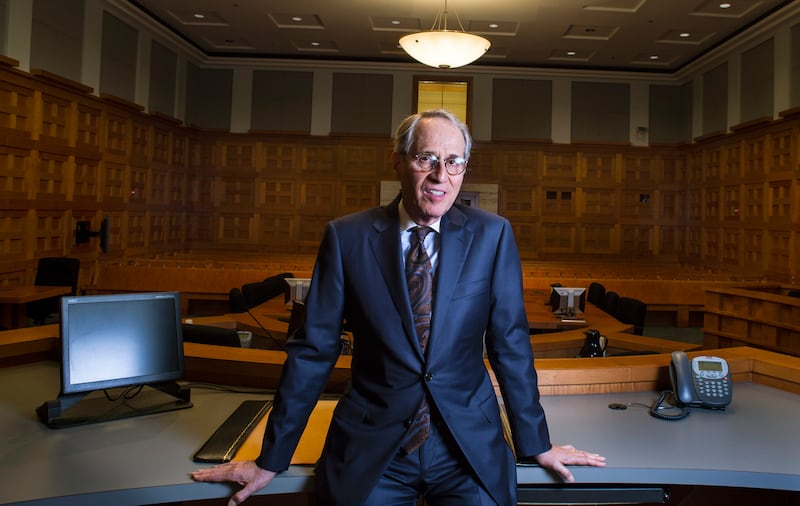
“The Department has at all times complied with the Court’s Order — it reinstated the PFACs (Pentagon Facilities Alternative Credentials) of every journalist identified in the Order and issued a materially revised policy that addressed every concern the Court identified in its March 20 Opinion."
Parnell continued, “The Department remains committed to press access at the Pentagon while fulfilling its statutory obligation to ensure the safe and secure operation of the Pentagon Reservation.”
The Daily Beast has contacted the White House for comment.