Even in a career full of diverse triumphs, Steven Soderbergh’s The Christophers stands out as special. It’s a feature about art and artists, originality and imitation, cruelty and kindness, and courage and fear that’s as wittily written and dexterously directed as it is magnetically performed.
A dramatic two-hander that pits Ian McKellen, 86, against Michaela Coel. 38, in a battle over a series of unfinished paintings and, additionally, their respective legacies, Soderbergh’s latest (April 17, in theaters) is amusing and moving in equal measure, and a genre-melding affair that stands as one of the year’s best.
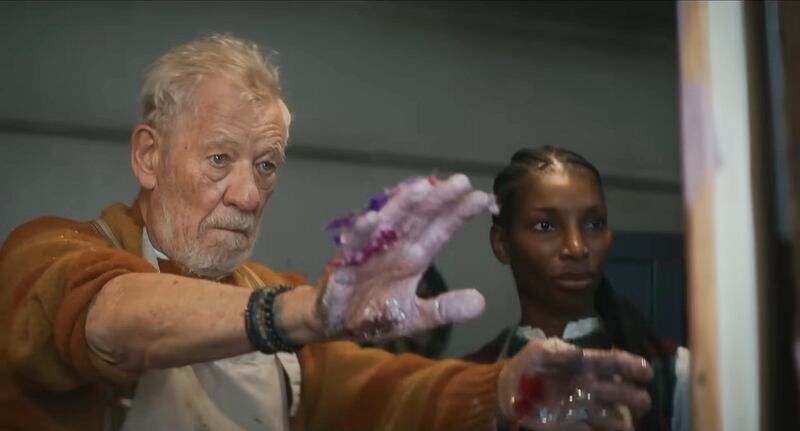
Written by Ed Solomon, with whom the Oscar-winning filmmaker previously collaborated on Mosaic, No Sudden Move, and Full Circle, The Christophers is the story of Lori Butler (Coel), who’s hired by conniving siblings Barnaby (James Corden) and Sallie (Baby Reindeer’s Jessica Gunning) to be the assistant to their legendary artist father Julian (McKellen), all so she can surreptitiously complete the third series of his “Christopher” paintings, which will net them a pretty penny after his death.
Since Lori has a background in forgery and a still-simmering beef with Julian, she agrees. Nonetheless, her attempts to pull off this ruse are complicated by the man she’s supposed to swindle—an arrogant, inappropriate, and self-loathing-fueled maestro whom she comes to find both infuriating and fascinating.
Though it has elements of heist and revenge films, The Christophers’ genre trappings serve only to mask what turns out to be a surprising saga about the intricacies of creativity and the terrors of irrelevance.
With McKellen giving an Academy Award-worthy performance and Coel matching him step for step, it’s a showcase for two of the screen’s most captivating stars. Moreover, it’s further proof of Solomon’s screenwriting gifts and Soderbergh’s ability to seamlessly wed form and content, his stewardship as agile as his leads’ stellar turns.
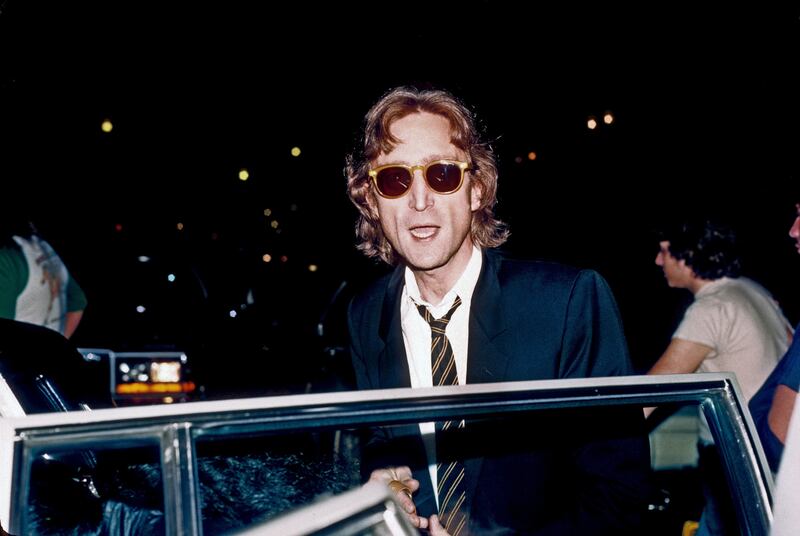
The Christophers is another feather in the cap of America’s most versatile auteur, and it arrives in theaters as he mourns the death of his Adam Driver-led Star Wars blockbuster, finishes a long-gestating interactive project about Jaws (for its 50th anniversary), and continues to dabble in AI with his Cannes-bound documentary John Lennon: The Last Interview.
As all this confirms, Soderbergh, 63, is not simply one of the medium’s greats—he’s also one of its busiest. Consequently, we were thrilled to chat with him about all these topics and more, including his thoughts on a movie industry that continues to evolve at light speed.
The Christophers is about an artist wrestling with his legacy and relevance at the end of his career. You’re still going strong, but after nearly four decades of filmmaking, are those subjects increasingly at the forefront of your mind?
I’m sure that’s part of it. In the original pitch to Ed, it probably wasn’t in my mind as consciously as it became, because it was a very simple pitch. It was more of a Ripley idea for [Michaela’s] character than it turned out to be. But for most creative people I know, the issue, as you reach a certain age, of whether or not you and the public consider your best work not to be in front of you is something that keeps us up late—as does trying to consider how to avoid that while staying true to whoever you are and what you’re about in a landscape that is always shifting.
While I’ve always felt that evolving is a natural, necessary part of being creative, the fear of irrelevance is still always present. And then, my dad died at 69. I think I’m taking better care of myself than my dad did, but you can’t help but use that as a potential near-term event. Like, what if I only have six more years? What am I doing with that time?
I’m sure the stresses of the industry also play a part in this?
Yes, then there’s the market telling you your value each time you go out with a project. Depending on the reactions, you’re forced to integrate that into your ideas about the future and whatnot. Not only what should you be doing, but what will you be able to do? I always have some ideas that are on a scale that allows me, if I want to, to just go do them myself. But in the last few years, most of the projects have been either small or mid-sized, and I’ve been hankering for something a little bigger.
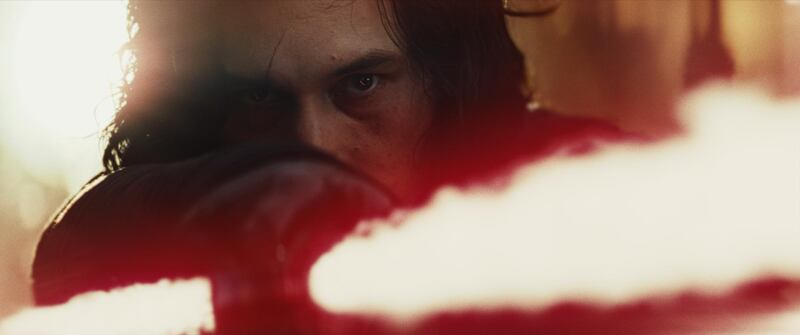
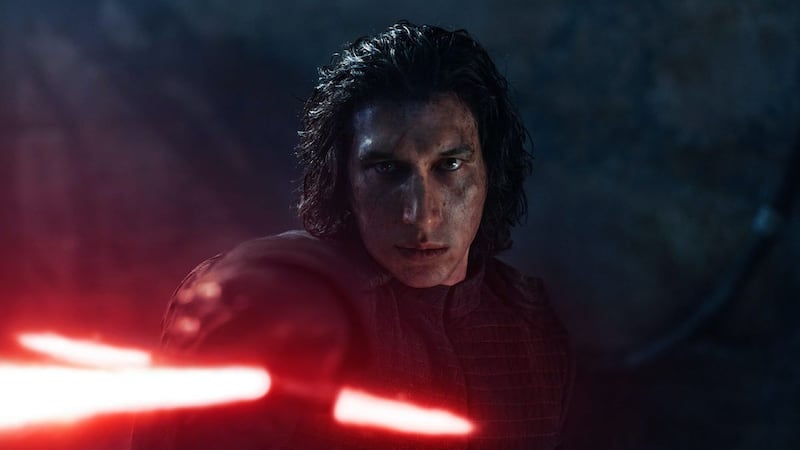
Was your Star Wars project—The Hunt for Ben Solo with Adam Driver, which Disney recently nixed—an outgrowth of that?
Star Wars was going to occupy that slot. That was going to be the biggest thing I’ve ever attempted to make. And I was excited about working on a big canvas. You know, it’s been a while. I’ve got other stuff that I’m trying to get going that’ll satisfy that desire. It’s an interesting time. A lot of this I address in the Jaws project, because in addition to being an analysis of how that movie activated me, and a breakdown of the movie itself in a very granular fashion, it also concludes with my thoughts about the job and how to do the job, and about process and how to behave. So these things have been on my mind. They’re always on my mind, but especially in the last six months, as I’ve tried to get the Jaws project finished, I’ve had to articulate a lot of these things.
When we spoke last year, you talked about Black Bag’s box-office potential and hurdles, and it went on to underperform. While your Star Wars film was already in development at that point, did Black Bag’s theatrical run (and what it demonstrated about the viability of mid-tier adult films) further motivate you to move toward bigger franchise projects?
I think the performance of Black Bag did push that kind of forward. We’d been working on Star Wars for a long time, and definitely, the performance of Black Bag became a very relevant piece of the narrative going forward about what’s viable. Not just for me, but for anybody who’s in my situation.
I don’t know how fruitful or smart it is to draw too many hard and fast conclusions about how that all played out, but it’s also hard not to look at it as part of a larger issue of mid-range budgeted movies for grown-ups in theaters. My concern is that this will affect people going forward who are trying to make things like that. The idea that a movie like Black Bag would be pointed to as, “Look what happens when you do that...” That would be sad for a filmmaker and for the business.
But look, all of that is like complaining about the weather. You just have to figure it out. It’s the artist’s job to adapt. There’s a range in the wave of writing that I did over the last six months of last year. And there’s a range of projects that will, I think, allow me to land on something that will happen that I’m excited about.
Did the Star Wars experience also, conversely, make you warier about entering a gigantic franchise machine?
No, I’m comfortable. I’m the cockroach after the nuclear winter [laughs]. There’s no version of the business that I don’t think I can find a way through. I didn’t view that as stepping into the maw of some machine that was going to chew me up. It’s conceivable—whether it’s an idea that I generate or if I’m approached by something that is “hell yeah!”—that I would find myself working in a franchise context. I’m not worried about that. I can function properly in that atmosphere.
Is there a secret to thriving in that sort of mega-budget environment?
It’s ultimately all about transparency of intention. Making it clear very early on what we’re all trying to do here. The problem is those situations where the studio thinks they’re getting one thing and you’re making something else, and that’s a breakdown in communication. I’ve always been extremely clear to the people that are paying for anything that I’m doing what I am doing. They know as much as I do. I’m not cultivating an aura of mystery or playing a game or trying to manipulate somebody. These things are hard enough without psychic real estate being chewed up by misunderstanding or subterfuge or whatever you want to call it. I just don’t have time for that s--t, and they don’t either.
How do you feel about Warner’s sale to Paramount, and what it says about the studio’s theatrical future?
Given the choices, it would seem, as we sit here, that the Paramount option gives more space to theatrical than the Netflix option would have. In their public-facing statements, they claim to be very committed to theatrical, and if that’s true, that’s great. We just won’t know the reality of this until it actually happens. There are so many variables and questions that we don’t know the answers to, and that they don’t know the answers to. And it’s not a linear path, necessarily. There are things that can happen culturally. There are things that can happen in the business that affect the performance of movies in the theatrical marketplace. A couple of giant hits can solve a lot of problems and answer a lot of questions, and a couple of failures can give you some answers but potentially create problems.
Those are things you can’t really control. You just have to put these things out and see what happens. I think we’ve all learned that the hard way. It’s extremely difficult to predict where anything is going to be a year from now. But the best-case scenario is that some version of Warner Bros. that looks like the current version, pre-merger, will survive, and that [Warner Bros. Co-Chairs and CEOs] Michael [De Luca] and Pam [Abdy] will have the ability to continue making movies that they like and are successful.
Back to The Christophers. You and Ed wrote the script with both Ian and Michaela in mind. Isn’t that a perilous proposition?
Perilous is the right word. You do that at your own peril, because there are obvious downsides if you don’t hit the jackpot. But I think in this case, if you asked Ed, he would say it was very, very helpful in writing the characters to have specific people that you’re targeting creatively. Certainly, I was the one who said, this is who I see. And Ed was like, well, that would be amazing, so let’s try and do that. I’m a big believer that you get who you’re supposed to get. That’s always been my experience. But it sure felt in our minds like it had to be them.
At this point, Ed and I have been through enough to feel like, as far as risky behavior goes, this was not lethal. It would have been disappointing not to get them, sure, but we would have figured it out.
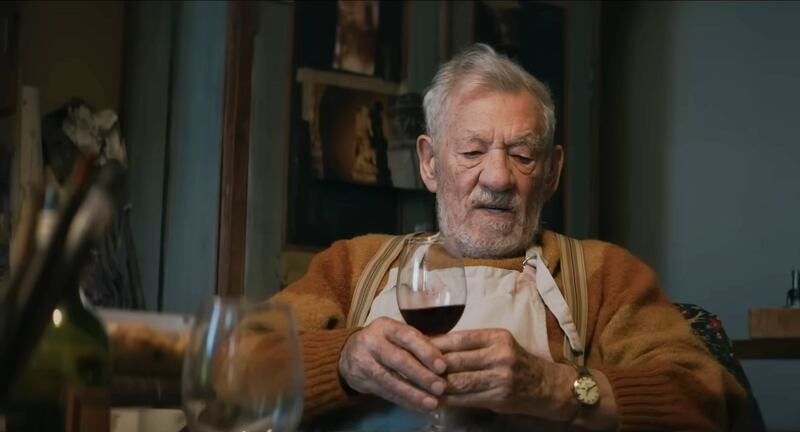
Ian is nearing the end of his career, and yet as he proves in The Christophers, he remains a vibrant and titanic presence. What do you think accounts for some artists remaining vital vs. others losing their gifts?
I think it’s probably an inherent personality trait and a worldview. Ultimately, it comes down to, he just loves doing it. He loves the job, and I think that solves everything. It’s also very inspiring to be around, because it gives you hope that that level of joy can be sustained indefinitely.
I still love my job. I don’t think if you saw me on set today, and then were able to go into the wayback machine and see me on set 25 years ago, that you would say, wow, he doesn’t seem to be enjoying it as much as he did then. I still love it. I think it’s the best job in the world. And I’m still learning and trying to get better. As long as that feeling remains, I’ll keep going. I have too much respect for the job and for other artists and creative people to ever show up without that sense of joy and excitement and privilege. It would be a sin for me to roll up and in any way be less than 100% happy about being there.
The Christophers presents a complicated portrait of forgery. Have you ever thought about making a film—like, say, Steven Spielberg’s A.I.: Artificial Intelligence—in someone else’s style?
Oh, I’m doing that constantly.
You really feel that way?
Absolutely! And it changes with each project. The degree to which other filmmakers are taking up space in your head shifts depending on the demands of what the thing is. But I’m always straddling several sets of shoulders to stand on whenever I’m working on something. Part of the homework is looking at other work and thinking, I’d like it to be in the vein of…
It’s all the s--t we’re railing against with AI, basically, right? In this case, I thought going in, it was kind of a Hal Ashby thing. Then, once we got closer and really into it, I realized, no, it’s a John Schlesinger movie. This is a movie John Schlesinger would crush. I went back and watched Sunday Bloody Sunday just to soak that up and try to tilt my decision-making toward that outcome. Because I’m a synthesist, as opposed to an originator. I continually live in the space of trying on other filmmakers.
Is that AI’s appeal—its capacity to synthesize?
To me, its uses are twofold. One, in the case of the Lennon doc, it’s creating images that are impossible to shoot in a fairly efficient way, as opposed to having to build them from scratch in a pure VFX space. It was really helpful to get what I had in my head on screen. A corollary of that, and the other good use of it, is the ability to iterate quickly. There’s an Ed Catmull [co-founder of Pixar] quote: “Be wrong as fast as you can.” It just gets you to something quicker so you can figure out what’s wrong quicker. That’s all it is.
I think its current existential status will eventually plateau, and its real uses will become apparent soon. It’s not the solve for everything. And although I’m wrong a lot, I don’t think it’s the utter disaster that some people feel it is. There’s no question, though, that everybody should at the very least engage with it to see how they feel about it. Pretending it’s not there and refusing to look at it, I don’t see the point of that.
Some well-known artists have taken that stance.
Some people I love and respect are taking the position that they refuse to touch it. That’s their call. I’ve never been like that. I want to know what’s out there, and play with it and see if I like it or I don’t like it. I may play around with it for a few years and then feel like I’ve reached the limit of what I think it can help me with. But there’s no question that it’s a new tool.
Can you talk about how you’re planning to use it for your upcoming Wagner Moura-headlined Spanish-American War film?
The issue here, it’s clear, is I’m going to have to figure out how to squeeze eight pounds of sausage into a two-pound bag financially. I have large-scale battles on water with scores of warships from 1898 that do not exist and that I cannot build. This is what it’s good for, potentially. To figure out how to do these sequences, and not have this thing cost a s--t-ton of money. It remains to be seen—because I don’t have the money yet—whether it can execute what I’m thinking in a way that satisfies me. But I’m going to explore that, because I have to figure out how to shoot these things. My job is to deliver the best possible movie at whatever I’m given. Based on my exposure to these tools, step one is, what can I accomplish in a financially responsible manner that serves the demands of the movie.
Is that film next on your plate?
Other things are in various stages of moving forward, but that one’s at the front of the queue right now.
Do you still have a hand in the Ocean’s Eleven franchise, which is planning both a sequel and a prequel?
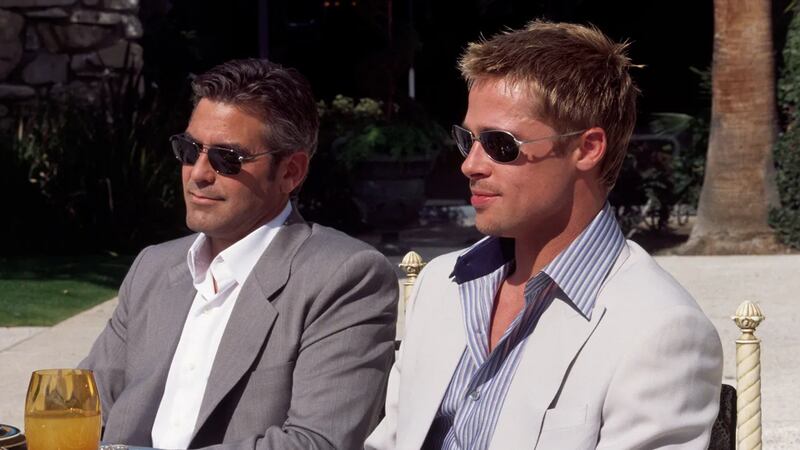
Between the three I did and then Gary’s movie [Ocean’s 8], I’ve put in the hours. Honestly, somebody else should make it theirs. I put my signature on the three I directed, and it’s all teed up for somebody else to do that, and they should. They’re tricky, but they’re fun. And it’s fun to make things that are fun. I have very fond memories of my Ocean’s duty, but it’s somebody else’s turn. I don’t know what else to give it.
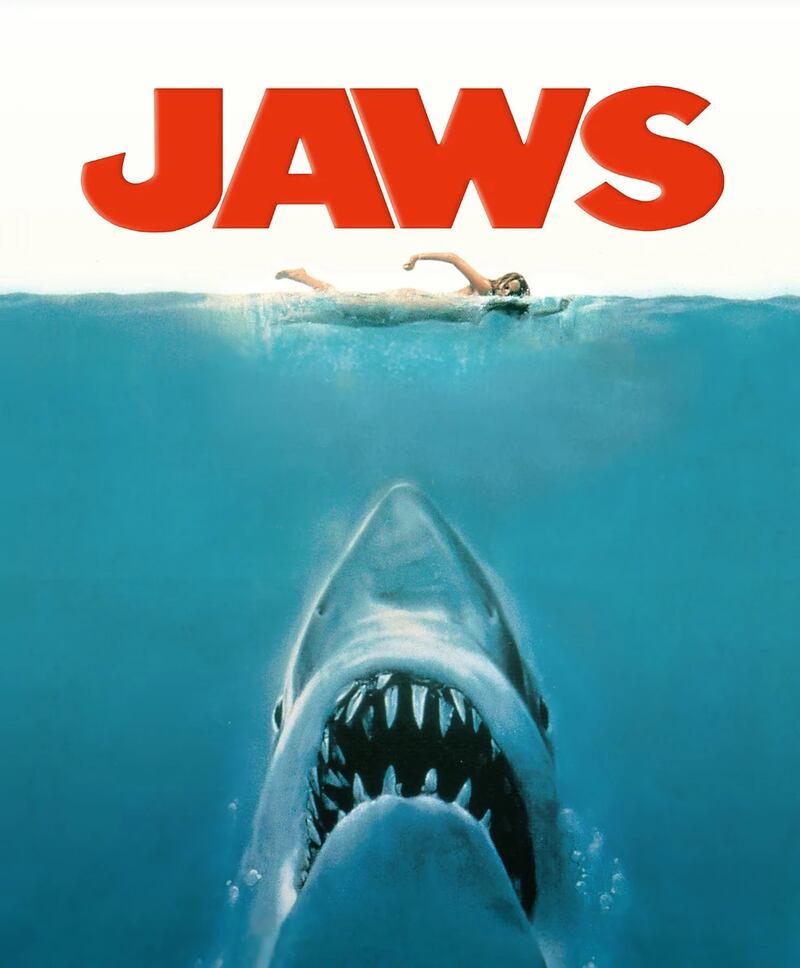
Lastly, can you tell me more about the 50th anniversary Jaws project, and why it began as a book but evolved into an app?
The only way to do that is to show you. [Takes out the app and shows it to me] We’re in Beta, but it’s all ready to go.
So it’s a day-by-day breakdown of the production, with images, behind-the-scenes stills, and your written commentary?
That was the only way to do that. It doesn’t work in a book. This is, again, the perfect tech to do this.
How much did you collaborate with Steven Spielberg?
I’ve been working on it for a long time. I think he heard about it and basically made it clear that he’s available to answer questions if I have any. I said, thank you so much, there will come a time, and that time is very near, because I’m almost at the end. There are still some outstanding questions I have. But he’s been very supportive of the idea. At some point, I have to get it in his hands.
How close is the release?
As it turns out, the process of getting an app on the Apple App Store is intense! We’re still in that, but we’re close. It could be as soon as four weeks, if everything goes well. At the very least, I would think eight weeks.
What made Jaws such a formative film for you?
Jaws was a combination of all these things—it was serendipity and chance and luck. I was at a point where I just lost one life obsession [being a baseball player] and was, consciously or unconsciously, looking for and in need of a new thing to fill up my life. This appeared right at that moment. It being what it is, and me being who I was at that moment, it all just fit. It was like, OK, this is the thing I’m now going to fill up my life with.
And it had to be that movie at that moment. I’d seen a lot of movies; my dad was a movie nut, and I saw movies all the time. But I hadn’t seen this one yet. And I hadn’t seen it in the midst of this early life crisis. I feel very fortunate that this collision took place because, as it turned out, it was the perfect movie for me to be activated by, because it’s got everything in it—what I describe in the introduction as the double helix of how to direct is in that film. I think it’s been important for many people, but for me, it was literal—me before I walk into that theater, and me when I walk out of that theater. That’s a life-altering two hours and four minutes.
It feels good to finally get it all out. This is 50 years of feeling and interest and thought that is now on the verge of being somewhere other than in my laptop or my head. You’re better off finishing something that isn’t good than not finishing something amazing. So just to be finished with it feels good.