It started with a simple request, inasmuch as a simple request can upend constitutional principles and electoral freedoms across the country: President Trump demanding five more GOP-drawn districts in Texas. In response, two blue states, California and Virginia, redrew their congressional maps, adding more Democratic seats to create a stalemate in a newly emboldened, hyper-partisan gerrymandering war.
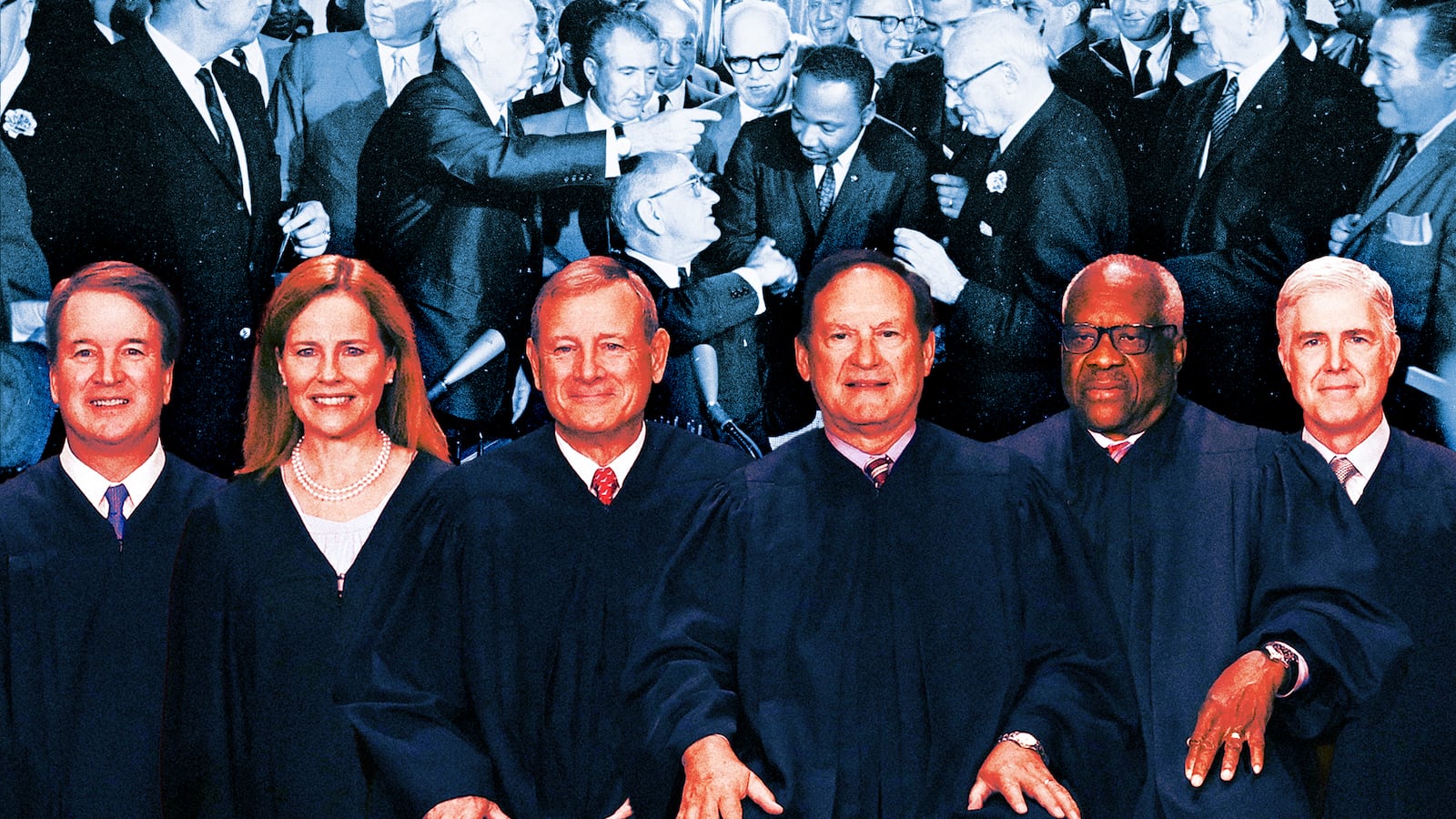
And then the Supreme Court’s conservative majority dropped a bombshell, obliterating the rationale for majority-minority congressional districts that have been the bedrock of the country’s efforts to right the wrongs of the past with the passage of the Voting Rights Act in 1965.
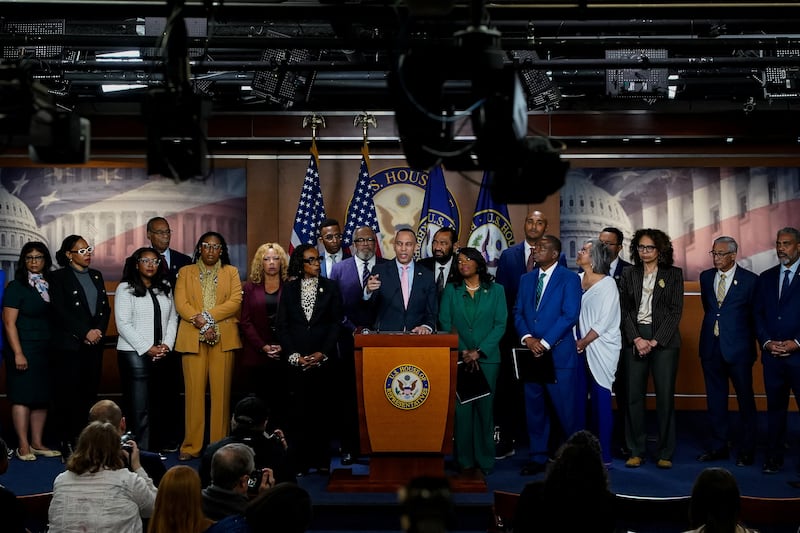
The casualties will be swift and unforgiving as red states across the South seek to capitalize on the ground they’ve been given. A quarter of the Congressional Black Caucus, as many as 19 Democratic seats, are predicted to see their districts redrawn and their electoral prospects dimmed, according to voter advocacy groups Fair Fight Action and Black Voters Matter. The same risks will likely impact ten percent of the Hispanic Caucus, which could be another 10 seats. The message from the Court is simple, too: time’s up for racial remedies.
The majority opinion written by Justice Samuel Alito does what SCOTUS does best—ignore the obvious reality of its partisan-fueled decision and cloak it in high aspirations. The conservative justices are fond of saying we live in a “color blind” America; indeed, Martin Luther King Jr said it first: Let us be measured by the content of our character and not the color of our skin. Except that’s not how the world works. And it’s certainly not how this decision works, either.

The argument as advanced by Justice Brett Kavanaugh, a Trump appointee, is that the majority-minority remedies previously put in place “are permissible for a period of time, sometimes for a long period of time… but that they should not be indefinite and should have an endpoint.”
(On the other side, Justice Ketanji Brown Jackson, a Biden appointee, countered that the 15th Amendment’s protection against racial discrimination has no time limit.)
“The South today is not the South of the sixties, but this ruling returns us to that era,” warned Devon Ombres, Senior Director of Courts and Legal Policy, Structural Reform and Governance at the left-leaning Center for American Progress. “Look at the greed and speed with which states are acting to capitalize on the ruling to bolster Trump and the GOP in the midterms.”
Case in point, the Republican governor of Louisiana halted an election where early voting was already underway—and a hundred thousand absentee ballots had been cast—to redraw his state’s electoral map to take full advantage of the decision. About a third of Louisianans are Black and the Supreme Court’s decision, Louisiana v Callais, specifically ruled unconstitutional a second majority minority district in the state’s six congressional districts.
Tennessee Senator Marsha Blackburn, who is running for governor, posted on X her vision of the state with all 9 of its districts in red, wiping out the single majority minority district in a state with 16 percent Black population. “It’s essential to cement @realDonaldTrump’s agenda and the Golden Age of America,” she said in her post. ”I’ve vowed to keep Tennessee a red state, and as Governor, I’ll do everything I can to make this map a realty.” (sic)

In South Carolina, where more than a quarter of the population is Black, longtime congressman Jim Clyburn has served 17 terms in the state’s lone majority-minority district. Four of five Republicans running for governor, meanwhile, are now calling for the elimination of Clyburn’s seat, prompting him to post on X that SCOTUS seems “hellbent” on eliminating “African American political representation.”
Clyburn is on a book tour promoting his book, “The First Eight,” about South Carolina’s first eight Black congressmen who served in Congress after the Civil War. A century would pass before the state made that number nine, electing Clyburn in 1992 after the 1990 census, district lines had been redrawn, and the then Supreme Court ordered South Carolina to create the state’s majority minority district.
But with the midterms just six months away and other primary elections underway, the extent to which the GOP can capitalize on the High Court’s ruling is limited. “It’s 2028 that gets dicey,” said Ombres, “because everybody is going to have the ability to completely redraw their maps (by then) and it will be a race to the bottom. If either party stops, that’s unilateral disarmament.”
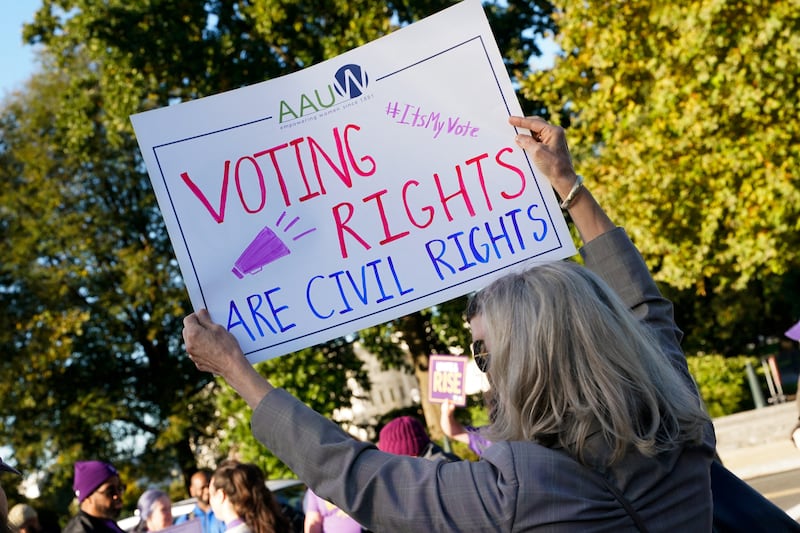
It’s also important to note, he added, that Congress in 1984 when it voted to reauthorize the 1965 Voting Rights Act said it was the “impact” of gerrymandering that matters, not the “intent.” Alito and his fellow brethren clearly disagree, completely rewriting the law and opening the door to one party winning all partisan maps.
There are no boundaries. SCOTUS, in a 2019 decision that was 5 to 4 along partisan lines, ruled that partisan redistricting is a political question—one that’s up to Congress to fix. That’s at best a hopelessly benign view of partisanship and its corrosive effects, knowing full well that lawmakers who benefit from the system are incapable of changing it. It’s like asking the golden goose to go cold turkey. It’s not happening.

Democrats, when they last controlled the House in 2024, introduced legislation to ban mid-decade redistricting—Senate Republicans killed the bill. So now it’s no more mister nice guy. “For a decade, people have been angry at Democrats for bringing a butter knife to a bazooka fight,” said Ombres. Backing off is not an option.
House Minority Leader Hakeem Jeffries has already jumped into the fray and vowed vowing to fight fire with fire, citing New York, Illinois, Maryland and Colorado as potential pickups for seats with redrawn maps in 2028. Democrats are hot to fight and talking big, but they don’t have the room to maneuver that Trump has in states with Republican majorities—look at Indiana, where the president targeted state-level lawmakers who had dared not fall in line with his plans for redistricting. In primary elections last night, many of these veteran legislators were ousted by Trump-backed candidates.
The Supreme Court has unleashed the worst of American politics— power and greed run amok in a gerrymandering war that needlessly pulls the scab off the still-healing wound of racial divisions. The highest of our courts has sunk to a detestable new low. Like all wars, it has both short-term and long-term implications that its progenitors prefer to wash their hands of it. And like all wars, the casualties will be the little guys—that is, American voters made to feel like they’re expendable too. Maybe that’s the point.