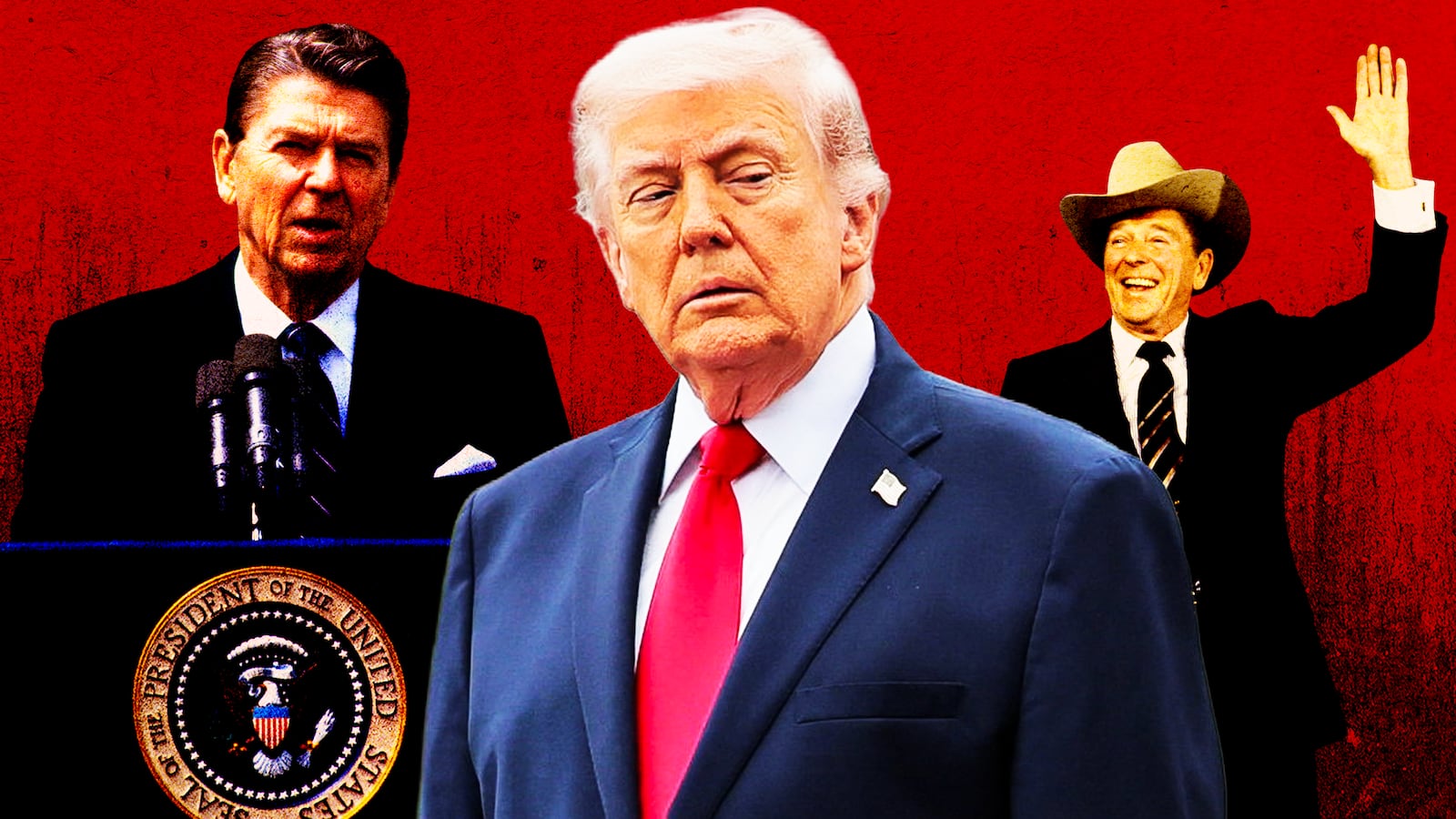
Outside of the Washington Hilton in D.C. on March 30, 1981, Ronald Reagan was shot. It was a seminal moment in his presidency and in U.S. history.
Footage of the incident looped endlessly on TV, showing a smiling Reagan waving as he returned to his car outside the hotel after speaking at a labor event. Then six shots rang out, creating chaos and confusion, as Reagan was violently shoved into his car.
His press secretary, James Brady, lay on the sidewalk, blood flowing from his head. It was at once disturbing and mesmerizing.
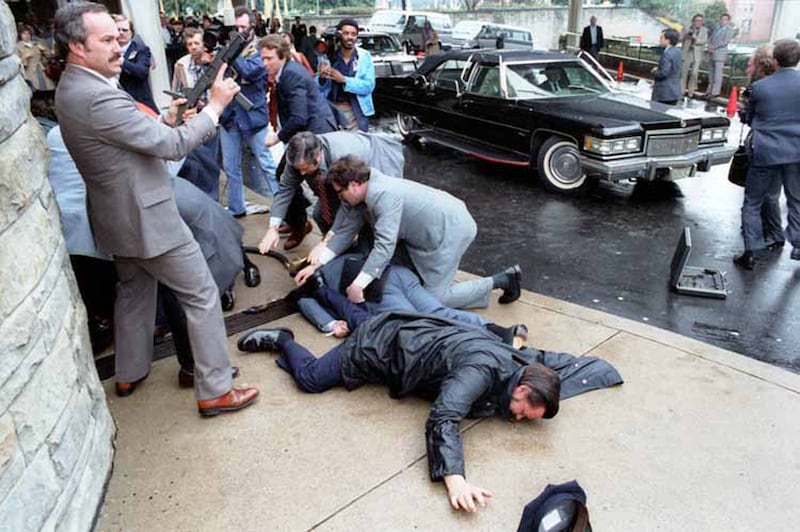
The ordinariness of the concrete and the Capitol cityscape made it more haunting. History—and specifically, America’s history of political violence—didn’t just happen in ornate building chambers or on battlefields. Sometimes it happens at a hotel. Martin Luther King was killed on April 4, 1968 on a balcony at the Lorraine Motel in Memphis. Robert F. Kennedy was shot at the Ambassador Hotel in Los Angeles in June 1968.
Reagan, too, that morning in March. He came within inches of death. Brady would never fully recover from his injuries.

From his hospital bed, the president famously joked to his wife, “Honey, I forgot to duck.” It was gallows humor, but it worked. It humanized him, and all of the life-altering aspects of the shooting for most Americans.
And out of that shared national tragedy came a genuine sense of collective purpose. There was bipartisan support for Reagan’s agenda in the immediate aftermath of the shooting, in Congress and across the country.
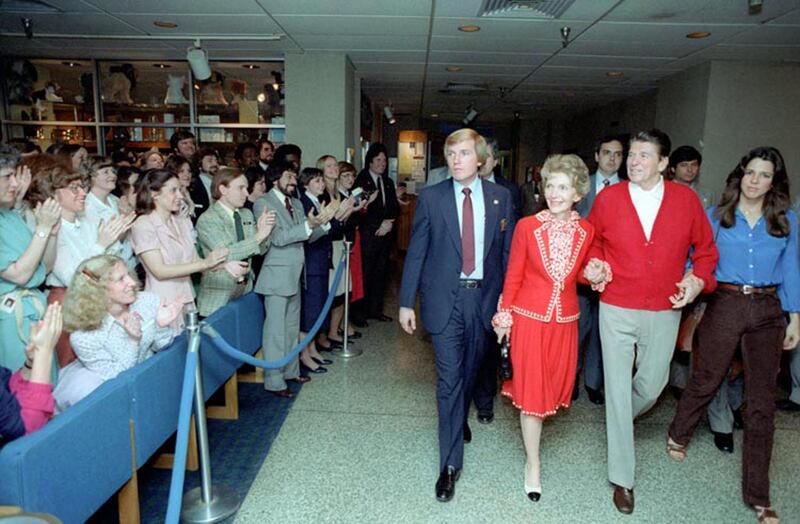
Although it took over a decade, there was the passage of the Brady Handgun Violence Prevention Act, named for Brady, whose life had been irrevocably altered that day. The law, which established federal background checks for gun purchases, drew rare bipartisan support, including from Reagan himself.
The Hilton became more than just a hotel. It became a place where the country had paused, grieved, and, in some small way, grown.
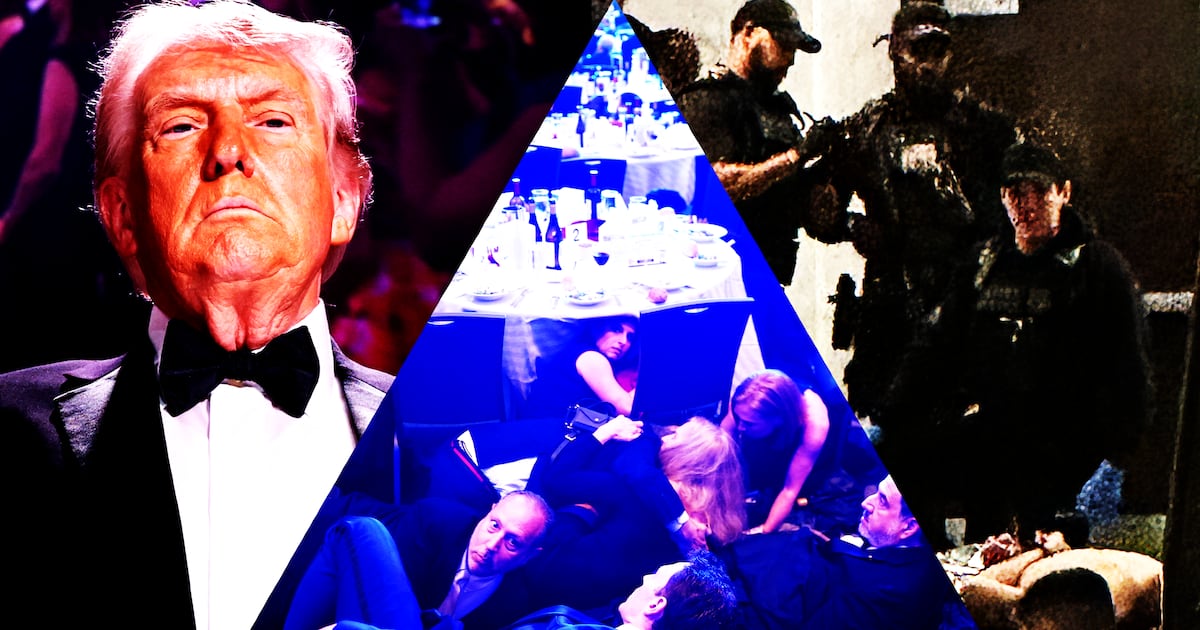
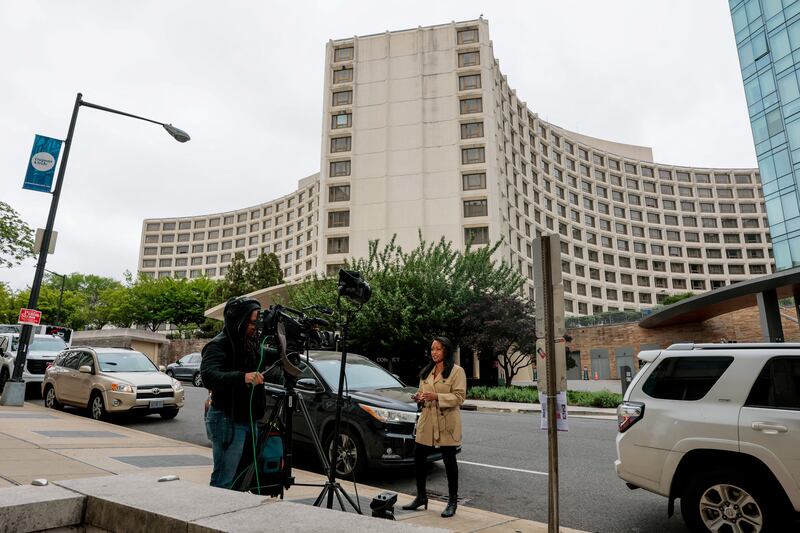
Over the weekend, at that same hotel, another gunman charged a security checkpoint. Shots were fired. A Secret Service agent’s vest stopped a bullet. Donald Trump was rushed out, having survived his third brush with an alleged assassin. By midnight, he was already talking about the White House ballroom.
On Sunday, Trump called the alleged shooter a “very sick man” and a “thug.” (Reagan, in turn, forgave his shooter, John Hinckley Jr., and even wanted to meet him in person.) He lashed out, using words like “disgrace” and “horrible” at “60 Minutes” correspondent Norah O’Donnell, criticizing her questioning of the shooter’s manifesto and the interview’s framing as biased.
There was no moment of national reflection, no collective intake of breath. Barely even time for the requisite “thoughts and prayers,” of which Trump, who in recent weeks shared an AI image of himself as Jesus Christ, has neither. No sense that the country had brushed up once more against something profound and needed to reckon with it.

By Monday afternoon, the headlines were about a different kind of assault, Melania Trump firing metaphorical shots at Jimmy Kimmel.
Reagan’s response to his shooting humanized him. It created space for empathy, community, and common ground.
Trump has spent the better part of a decade fomenting quite the opposite. He has systematically dehumanized his opponents, the press, entire institutions, and anyone he deems disloyal. In that environment, there is no shared emotional ground to stand on, except anger and vengeance.
There is no reason to expect unity or change in the aftermath of this latest incident at the Washington Hilton.
For certain, there will be no gun law like the Brady Bill this time. No sustained period of national introspection. No enduring image, like Brady’s, forcing the country to confront the human cost of political violence. Well, maybe there is an ironic one: the image of Trump stumbling and falling behind Secret Service agents as he was rushed off the dais in the Hilton ballroom. He didn’t forget to duck.
And there’s yet another twisted irony. Trump’s press secretary, Karoline Leavitt—who couldn’t hold a candle to Brady—praised Trump on Monday for being “fearless” and “courageous.” For exactly what remains a mystery. And she had the gall to say that “Democratic rhetoric” was responsible for the shooting.
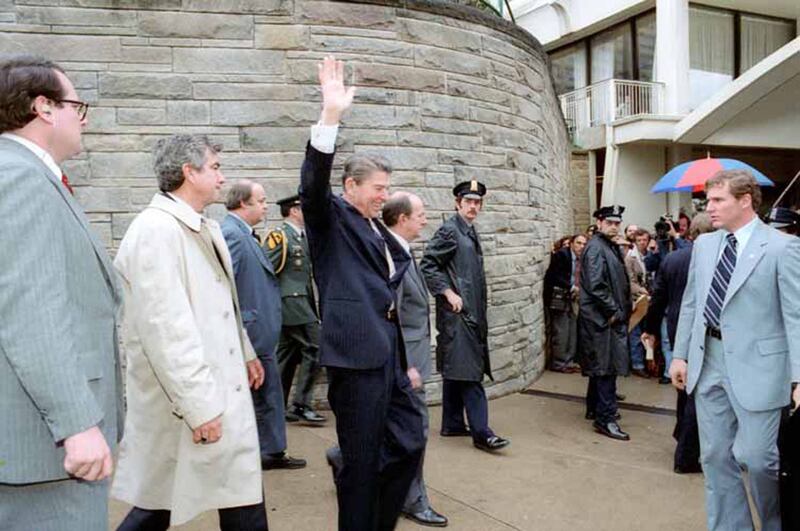
Reagan was shot just 18 years after JFK’s assassination in Dallas, in a country that still remembered how to have empathy for a president. The shock and aftermath of Kennedy’s killing, now almost 63 years ago, have faded. This time, Trump made certain to sustain the great divide he has fostered, returning quickly to demeaning and degrading rhetoric.
The Washington Hilton, long tagged with the moniker “Hinckley Hilton,” hasn’t changed much over the years, despite a $150 million renovation in the late 2000s. The facade remains the same.
In 1981, outside that Hilton, Reagan was shot and the country coalesced. Forty-five years later, inside the Hilton, Trump was unscathed, and the country was unmoved.