Russian Billionaires’ Humiliating New Putin Nickname Revealed
Russian billionaires are turning on Vladimir Putin behind closed doors.
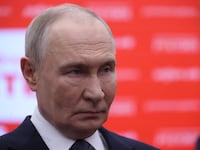
Contributor/Getty Images
Vladimir Putin’s billionaire loyalists are privately mocking the very president on whom their fortunes depend.
Russian oligarchs are reported to have dropped their once respectful nicknames for the 74-year-old leader, replacing them with “Ded”—a dismissive Russian term meaning “oldie” or “granddad.”
According to exiled Russian journalist and analyst Alexandra Prokopenko, the change reflects a shift in how members of Russia’s wealthy business elite privately view Putin.

Relations between Trump and Putin have grown warmer recently, alarming Ukraine and its allies in Washington and Europe.
Kevin Lamarque/REUTERS
Speaking to the BBC, she explained that businessmen previously referred to him as “Nachalnik” (boss), “Perviy” (first) or simply “VV”—names that conveyed authority and respect. The new nickname, she said, carries “a pinch of contempt.”
It comes as Russians grow restless with Putin’s war in Ukraine, with Moscow facing mounting military losses.
Sign Up for Our Beast Digest Newsletter
By clicking “SUBSCRIBE” you agree to our Terms of Use and Privacy Policy.
NATO Secretary General Mark Rutte said last week that more than 40,000 Russian troops were killed or seriously wounded each month, with preliminary figures suggesting October’s toll could have exceeded 50,000.

NATO Secretary General Mark Rutte has warned that Putin is failing in his war.
Evan Vucci/REUTERS
“The U.S. in 14 years, in Vietnam, lost 56,000. Here in one month, Russia, dead or seriously wounded, 40,000,” Rutte said at the Atlantic Future Forum.

Meanwhile, Western sanctions continue to affect the cost of living for ordinary Russians.
But sanctions have also left Russia’s once powerful business tycoons feeling ostracized.

“They’re treated like low-level criminals. They can’t fly their private jets. Their yachts can’t park in all the best harbors in Europe. It must be very awful and humiliating for them,” Putin critic Bill Browder, who was banned from the country in 2005, told the BBC.
“They have no cards, they have no game,” exiled politician and analyst Dmitry Nekrasov added. “They’re rich because they’ve got something to do with Putin, not the other way round.”
Growing resentment has reportedly left some of Russia’s wealthiest businessmen quietly dreaming of a post-Putin future.

Russian casualties in the war are mounting.
Shamil Zhumatov/REUTERS
According to Prokopenko, that could look something like post Soviet Union Russia in the 1990s, when Russia’s newly wealthy tycoons wielded enormous political influence.
“They’d like to return to a time when they were listened to, when they were not stripped of assets and when they understood the rules of the game,” Prokopenko said.

They also long for a return of politics to everyday life, with less repression, greater freedom of speech, and genuine competition for power, Prokopenko added.
But despite their growing discontent, few dare to speak out.

Putin wields tight control over his country.
Sputnik/Sergei Bulkin/Pool via Reuters
Browder believes the oligarchs are too frightened to turn against Putin, warning: “They understand that if they were to do anything that would challenge Putin, he would kill them. And Putin is a very paranoid little man.”
Former major Russia investor Mike Calvey shares that assessment, questioning what the businessmen could realistically do without risking everything. “What can they do besides just go straight to the prison and lose their assets?” he told the BBC.
The atmosphere of paranoia is so extreme that Prokopenko recalled interviewing one billionaire who sat on his mobile phone throughout their conversation, believing it would make it harder for Russian security services to eavesdrop.
“I thought that it’s an absolutely Stalinistic type of fear. It’s absolutely irrational,” she said.
See more of our coverage in your search results.

Got a tip? Send it to The Daily Beast here.
Register below to read this article for free or subscribe
to unlock unlimited access to The Daily Beast.
Monthly
$1
First month then $5.99/month
Annual
$35
First year then $59.99/year
Premium
$79
First year then $119.99/year
*Substack access provided by the next business day, using your subscription email. Choosing the Premium plan constitutes your permission to share your subscription email with Substack and your agreement to Substack’s Privacy Policy.
Already have an account? Sign In
Looks like you already have a subscription!
- Account (completed)
- Payment (completed)
- Confirmation (completed)
You're all set!
Thanks for subscribing.
- 1Account
- 2Payment
- 3Confirmation
Sign in or create an account
Login dialog
Loading comments…