President Donald Trump’s previous dismissal of migrants from “s--thole countries” has come back to haunt him in a legal showdown over immigration rights.
The Supreme Court on Wednesday examined whether the Trump administration has the authority to end temporary protected status (TPS) for around 350,000 Haitians and 6000 Syrian immigrants living in the U.S. without facing judicial review.
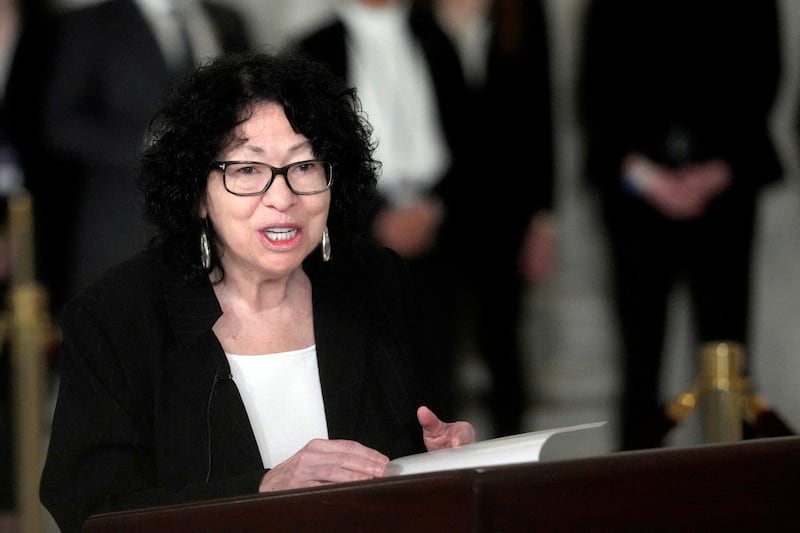
“Now we have a president saying at one point that Haiti is a ‘filthy, dirty and disgusting s--hole country,’” liberal Justice Sonia Sotomayor said in court. “I’m quoting him.”
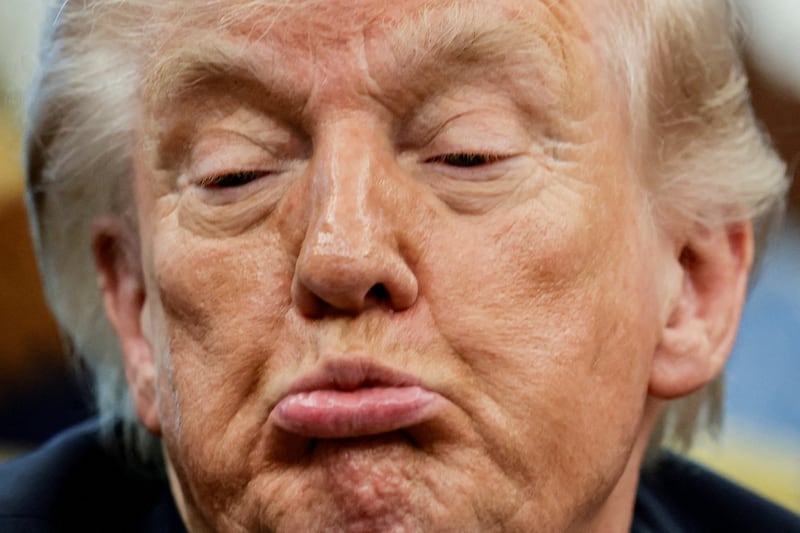
“He declared illegal immigrants, which he associated with TPS, as poisoning the blood of America,” Sotomayor continued. “I don’t see how that one statement is not… showing that a discriminatory purpose may have played a part in this decision.”
Trump referred to Haiti, El Salvador and African nations as “s--thole countries” during a meeting discussing protecting immigrants at the White House in 2018.
While he initially distanced himself from the language, at a rally in 2025 Trump referenced the meeting from eight years earlier, saying, “Why is it we only take people from s--thole countries, right?”
He said he would prefer immigrants from Norway, Sweden and Denmark.
“Send us some nice people, do you mind?” Trump said. “But we always take people from Somalia. Places that are a disaster, right? Filthy, dirty, disgusting, ridden with crime.”

Trump also repeatedly said in 2023 that undocumented immigrants were “poisoning the blood of our country.” A year later, he said there were “a lot of bad genes” while discussing murders allegedly committed by immigrants living illegally in the U.S.
During oral arguments, Solicitor General John Sauer argued that Trump’s statements, when taken in context, were referencing non-racial issues such as poverty, crime, welfare, and drugs.
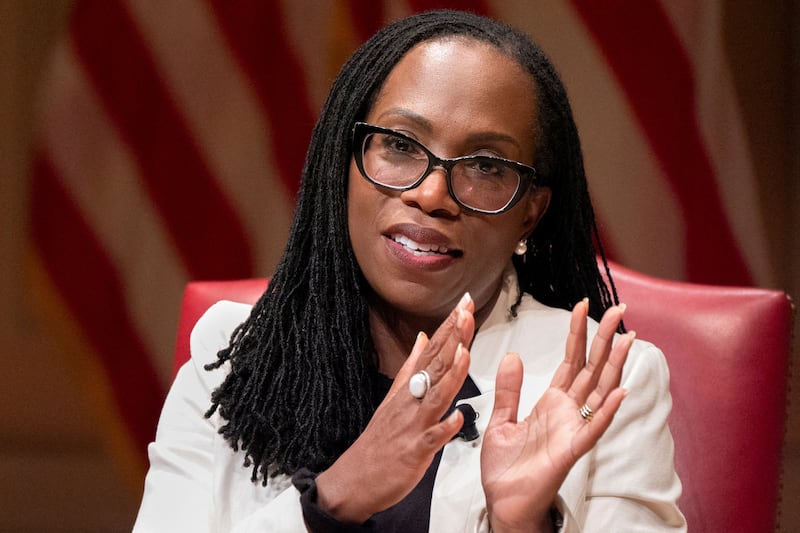
“What about, ‘Poisoning the blood‘ of Americans?” fellow liberal Justice Ketanji Brown Jackson said, pushing back. “What about ‘bad genes?’”
“So the position of the United States is that we have an actual racial epithet that we aren’t allowed to look at all the context,” Jackson continued, pointing out Trump’s “insistence” that individuals from countries with “African immigrants, black African immigrants are not allowed” into America.
The TPS program offers humanitarian relief to people from countries who are fleeing wars, natural disasters or other catastrophes. It has been in place since 1990, and gives recipients legal status in the U.S. and the ability to apply for work authorization for up to 18 months.

Haitians have been eligible for TPS following an earthquake in 2010, while Syrians were eligible after a 2012 civil war. Former Homeland Security Secretary Kristi Noem claimed last September that after conditions in both countries had improved, people from Haiti and Syria were no longer able to apply.
However, the State Department currently includes both Haiti and Syria on its “do not travel” list.
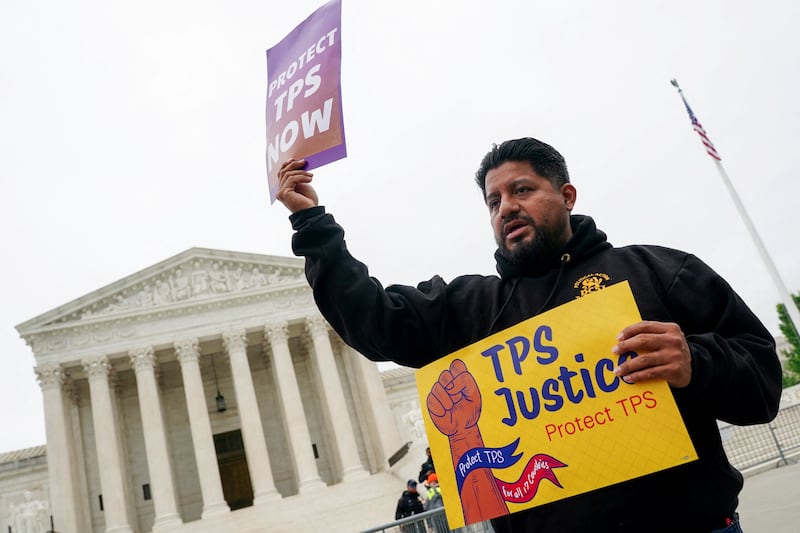
Trump issued an executive order in January 2025 requiring DHS to cull TPS eligibility.

Geoffrey Pipoly, the lawyer for the Haitian plaintiffs, called the DHS review of TPS a “sham.”
Pipoly argued that “the true reason for the termination is the president’s racial animus towards non-white immigrants and bare dislike of Haitians in particular.”
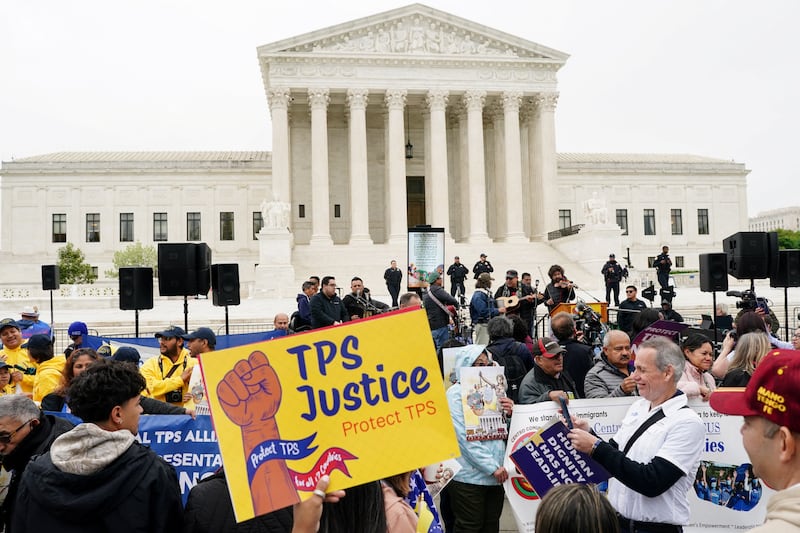
“The president has disparaged Haitian TPS holders specifically, as undesirables from a quote, ‘s--thole country,’ and days after falsely accusing them of, quote, ‘eating the dogs’ and ‘eating the cats’ of Americans, he vowed that he would terminate Haiti’s TPS, and that is exactly what happened,” Pipoly said.
A decision in the case is expected by June.
The Supreme Court previously allowed the Trump administration to remove access to TPS from 600,000 Venezuelans in the U.S.