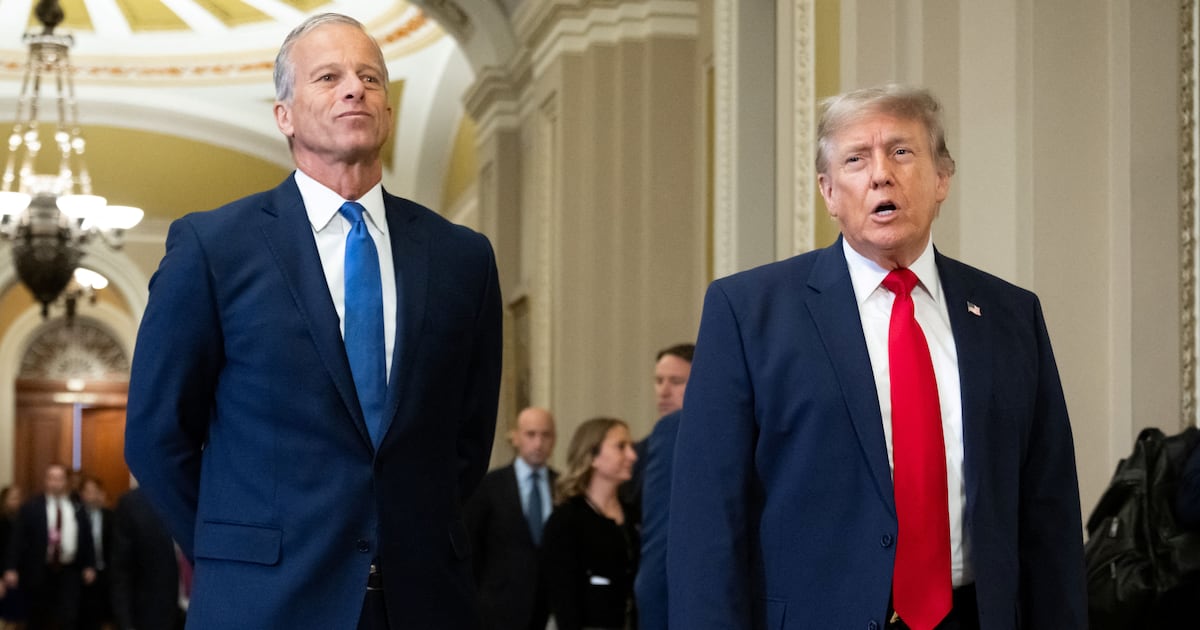
President Donald Trump kicked off his clash with Pope Leo XIV just days before a meeting between Secretary of State Marco Rubio and the U.S.-born Catholic leader.
Trump, 79, has repeatedly taken aim at the 70-year-old since launching strikes against Iran on Feb. 28, infuriated at Leo’s calls for peace and an end to the conflict.
Pope Leo has not shied away from hitting back in his own way, bemoaning the fact that the world is “being ravaged by a handful of tyrants” without naming any particular figure.

Incensed by the Catholic leader’s repeated calls for peace, Trump lashed out during a Monday interview with Hugh Hewitt on the Salem News Channel.
Hewitt, discussing jailed Hong Kong media tycoon and pro-democracy activist Jimmy Lai ahead of Trump’s visit to China later this month, criticized the pope for not highlighting Lai’s plight. Lai was jailed for 20 years over claims that he colluded with foreign forces and conspired to commit sedition.
“I wish Pope Leo would talk about Jimmy Lai,” Hewitt said, adding, “You’ve talked about Jimmy Lai with the chairman [Chinese President Xi Jinping], will you be bringing him up again?”
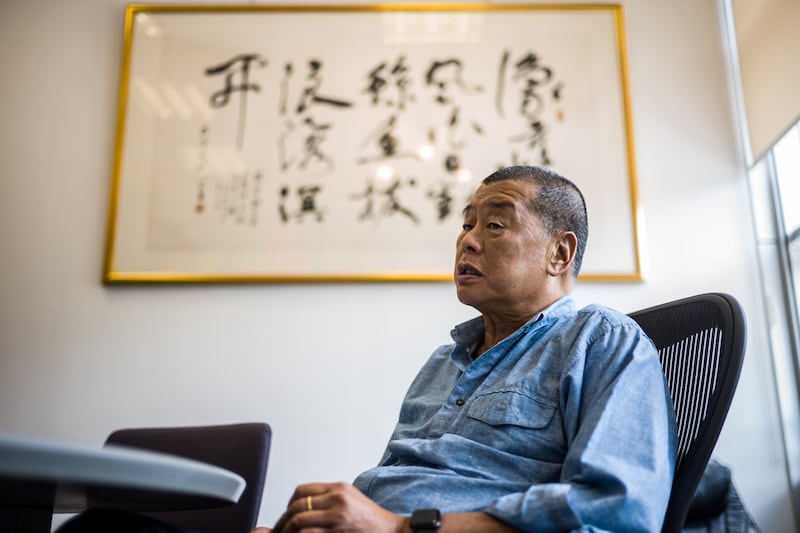
After Trump said he would bring up Lai in discussions with Xi, Hewitt exclaimed once more that he wished the pope would talk about him.
“Well, the pope would rather talk about the fact that it’s OK for Iran to have a nuclear weapon, and I don’t think that’s very good,” Trump replied.
“I think he’s endangering a lot of Catholics, and a lot of people, but I guess if it’s up to the pope, he thinks it’s just fine for Iran to have a nuclear weapon.”
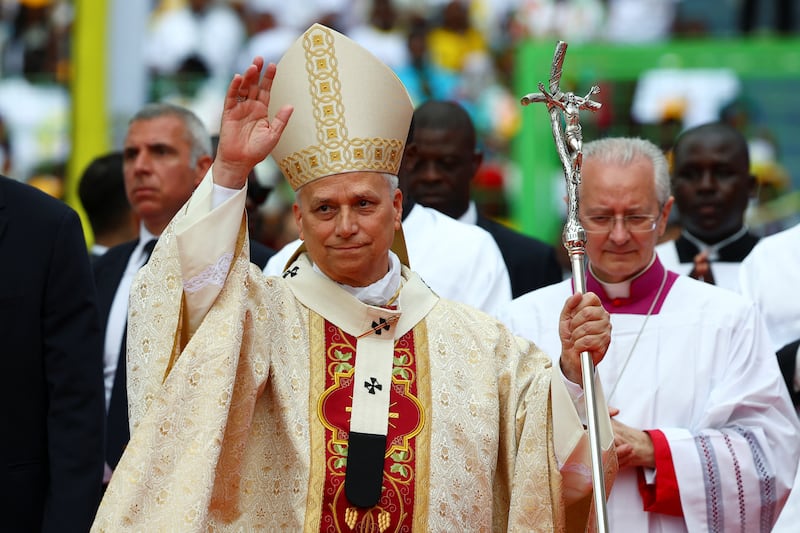
The pope has previously declined to comment on Lai’s case, instead saying, “We must pray for peace, work for peace and reduce hatred. Hatred is constantly increasing in the world. We must seek to promote dialogue and find solutions.”
The pope’s comments on Lai’s case are similar to his repeated calls for peace in the Middle East; a reminder to simultaneously pray for peace while also working to achieve it.
“Dear brothers and sisters, there are certainly binding responsibilities that fall to the leaders of nations. To them we cry out: Stop! It is time for peace! Sit at the table of dialogue and mediation, not at the table where rearmament is planned, and deadly actions are decided,” the pope told some 10,000 Catholics gathered at St. Peter’s Basilica last month.
Despite Trump’s assertion that Pope Leo supports Iran’s nuclear program, the pope has in fact specifically called for a world “free from the nuclear threat.”
In a video message posted on March 5, Leo said, “Today we lift up our prayer for peace in the world, asking that nations renounce weapons and choose the path of dialogue and diplomacy.”
“Lord, enlighten the leaders of the nations, so they may have the courage to abandon projects of death, halt the arms race, and place the lives of the most vulnerable at the center,” he continued. “May the nuclear threat never again dictate the future of humanity.”
Trump’s comments come just days before Rubio is set to meet with the pontiff in Rome in an attempt to improve relations between the Trump administration and the Vatican.
In one of his most notorious pope-related meltdowns, the president branded Leo as being “weak on crime, and terrible for foreign policy” before taking credit for his success.
“Leo should be thankful,” Trump wrote on Truth Social, arguing that “he wasn’t on any list to be Pope, and was only put there by the Church because he was an American, and they thought that would be the best way to deal with President Donald J. Trump.”
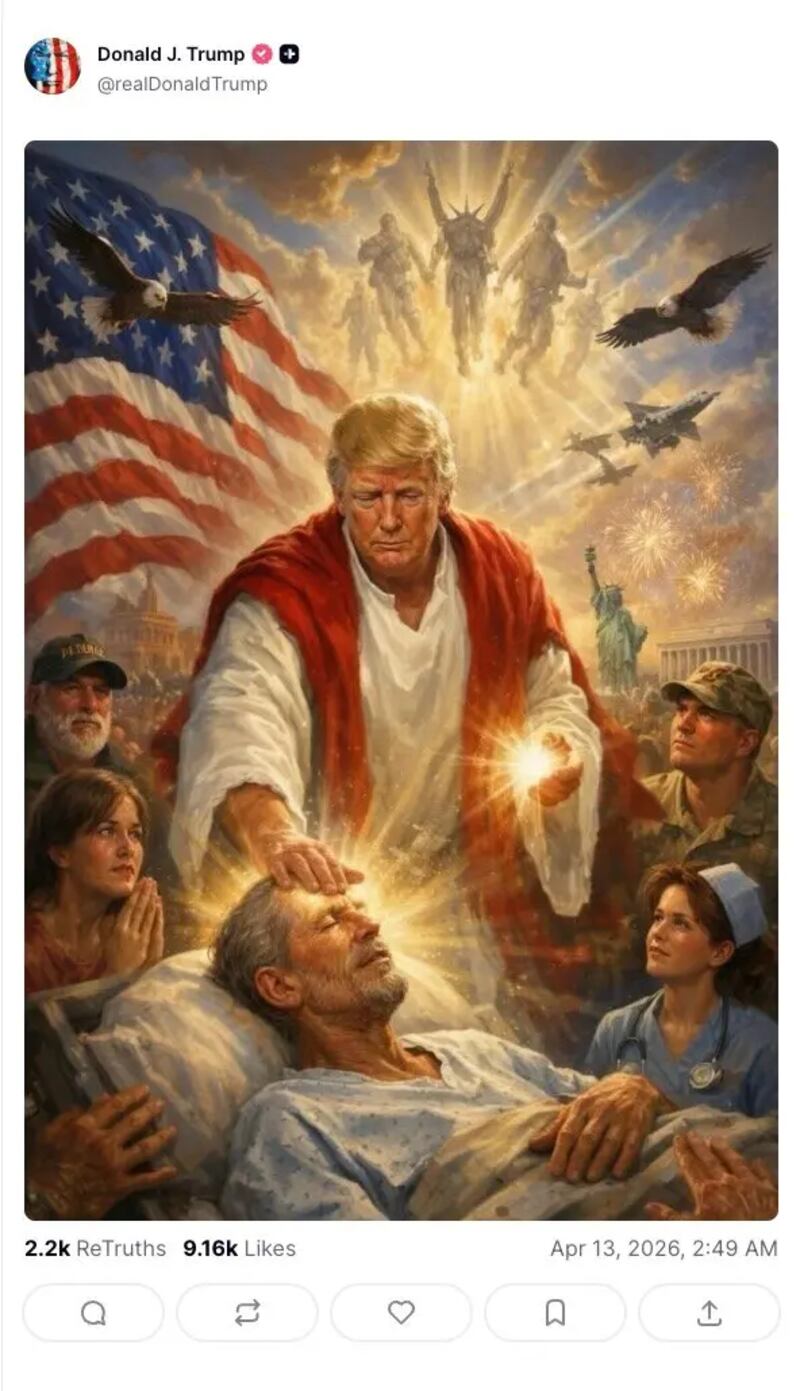
Trump quickly followed his 334-word rant with an AI-generated image of himself as Jesus Christ, a move that offended many Christians in his party.
In June 2025, one week before Trump bombed three nuclear sites in Iran, the pope made an appeal to “responsibility and reason” amid growing tensions in the Middle East.
“The commitment to creating a safer world, free from the nuclear threat, should be pursued through respectful encounter and sincere dialogue, to build a lasting peace, based on justice, fraternity and the common good,” he said in an address. “No-one should ever threaten the existence of another.”