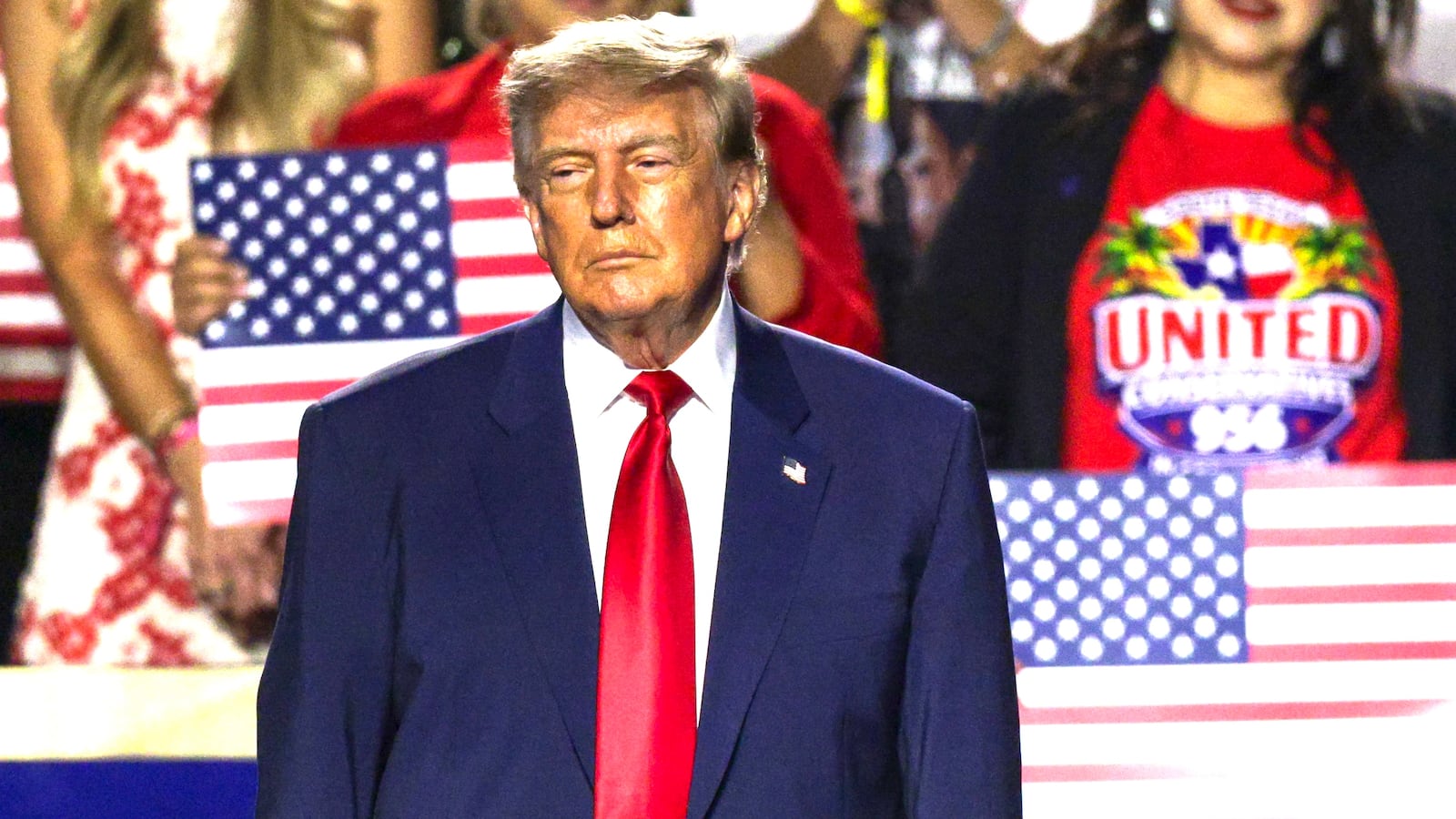
Donald Trump’s big GOP convention was supposed to fire up Republican voters. Instead, it was the Democrats who came out of it stronger.
The Dallas event, held Sept. 9-10, was designed to energize Republicans ahead of the Nov. 3 midterms. Trump declared that the gathering had been “a solidly sold out winner for Republicans,” touting the convention on Truth Social.
But the polling numbers afterward tell a different story.
RealClearPolitics’ average of the generic congressional ballot put Democrats at 50.5 percent and Republicans at 42.1 percent as of Sept. 29—a Democratic lead of 8.4 points.
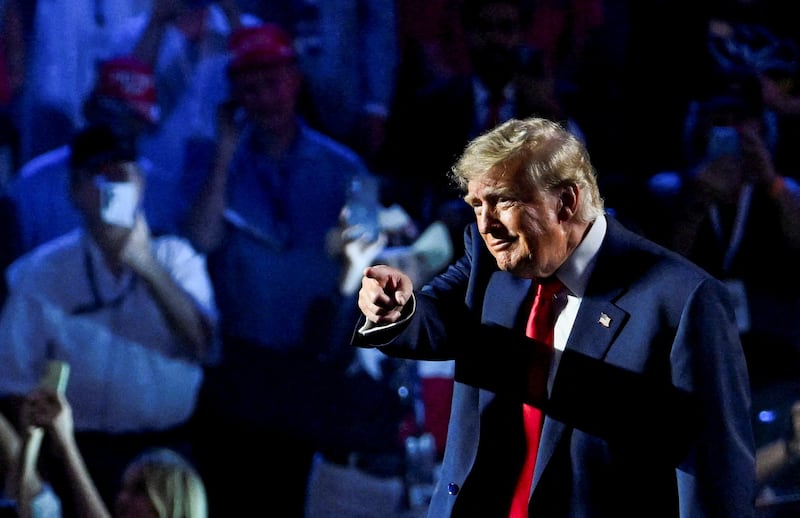
That is a sharp increase from Sept. 7, when the Democrats held 48.1 percent to the GOP’s 42.3 percent.
Support for the Democrats has been growing since Sept. 12, the day after Trump’s convention. By Sept. 16, Democrats had risen to 50.3 percent while the GOP had slipped to 41.6 percent, expanding the Democratic lead to 8.7 points.
RNC National Press Secretary Natalie Baldassarre dismissed the polling.
“Polls serve as a snapshot in time, not a crystal ball. Republicans are unified in the pursuit of winning, and we’ll continue to use all the tools at our disposal to expose Democrats’ far-left agenda so we can defy history in November,” she told the Daily Beast.
Trump billed the convention as a chance to turn around Republican fortunes—with himself as the major selling point—after polls suggested a bleak midterm showing for the GOP.

The latest CNN/SSRS poll showed that the national congressional ballot gives Democrats an 8-point lead, 49 percent to 41 percent.
Meanwhile, a midterm-high 44 percent of registered voters say their congressional vote will be a message of opposition to the president.
If the numbers play out along those lines on Nov. 3, the Democrats should regain control of the House and stand a good chance of capturing the Senate too.
To boost support for his party, Trump has resorted to what critics say is a straightforward bribe. Speaking at the Dallas convention, he promised a $5,000 dividend for every American adult if Republicans retain control of both chambers of Congress.
But a Reuters/Ipsos survey of 1,143 Americans showed that the $1.35 trillion gambit was not popular, even with his own voters.
The poll showed that 63 percent disapproved of the proposal—including four in 10 Republicans and nine in 10 Democrats.
Trump’s support has taken a hit since he launched his war on Iran in February, sending energy prices soaring.
The latest CNN/SSRS poll found only 26 percent approve of his handling of the conflict, down from 33 percent a month after the war began. Among Republicans, approval fell from 73 percent in March to 60 percent.
The CNN/SSRS poll showed that overall, strong approval of Trump among GOP voters has fallen to 35 percent, down from 66 percent in September 2018.
Meanwhile, half of Republicans said they disapprove of Trump’s handling of inflation, while 59 percent say the Iran war has harmed their finances.
Other surveys suggest Trump himself may be influencing how voters view Republican candidates.

A CBS News/YouGov poll of 2,460 U.S. adults conducted Sept. 8-11 found that 48 percent of likely voters said a Trump endorsement would make them less likely to support a candidate, compared with 21 percent who said it would make them more likely.
A separate Financial Times/Focaldata survey found 46 percent of voters believed Trump was making it harder for Republican congressional candidates to win. Among independents, 47 percent said a Trump endorsement would make them less likely to support a candidate.