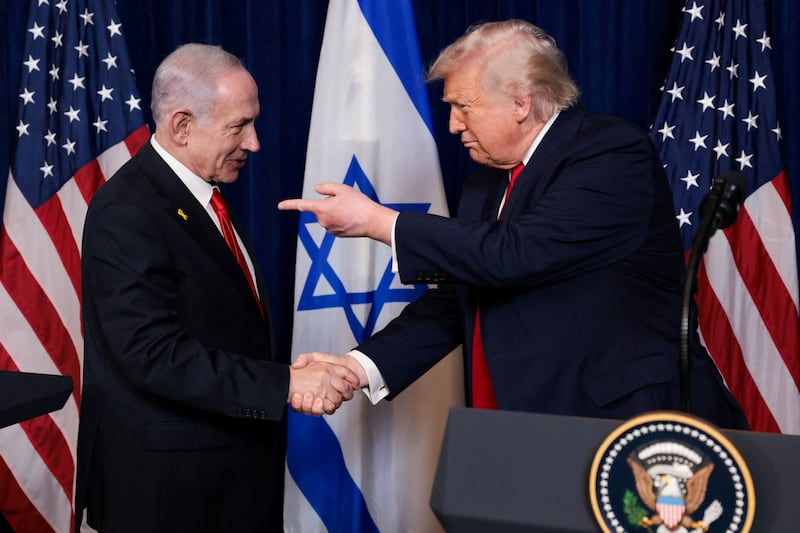
President Donald Trump’s warmongering buddy, Israeli Prime Minister Benjamin Netanyahu, suggested that Israel is looking to wean itself off from America’s financial support and go it alone.
Netanyahu, 76, told 60 Minutes on Sunday that Israel is looking to rethink its financial dependence on the United States amid the two nations’ joint offensive against Iran, which has now stretched into its 10th week.
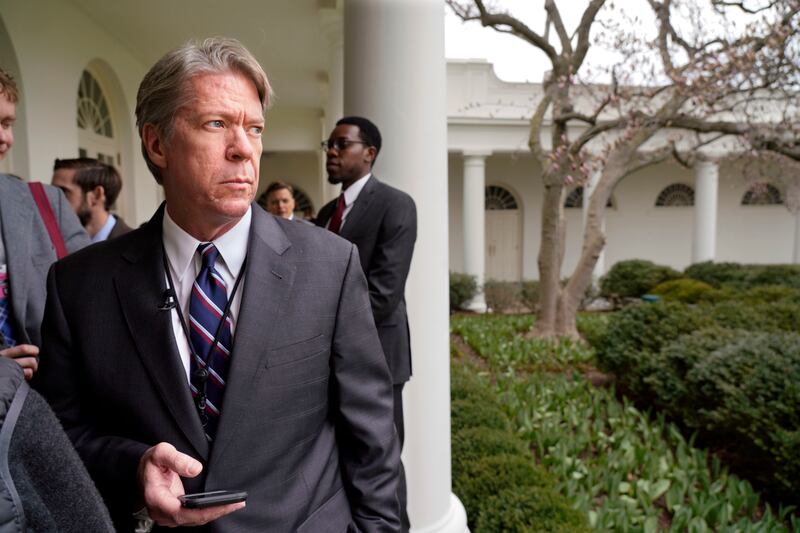
“Do you believe it’s time for the state of Israel to reexamine and possibly reset its financial relationship to the United States? Meaning, what the United States provides to Israel on an annual basis?” CBS News chief Washington correspondent Major Garrett asked the Israeli prime minister.
“Absolutely,” Netanyahu replied. “You know, I’ve said this to President Trump, I’ve said it to our own people. Their jaws drop, but I say look.”
“What do you mean?” Garrett, a former Fox News correspondent, said. “What are you saying?”
“I want to draw down to zero the American financial support—the financial component of the military cooperation that we have—because we receive, we receive $3.8 billion a year," the prime minister said. “And I think that it’s time that we wean ourselves from the remaining military support.”
“Can you give me a timetable?” Garrett asked.
“I said, let’s start now, and do it over the next decade, over the next 10 years. But I want to start now. I don’t want to wait for the next Congress,” Netanyahu said. “I want to start now. And uh, you know, it could go down very fast.”
The White House did not immediately return the Daily Beast’s request for comment about the prime minister’s remarks.
Elsewhere in the interview, Netanyahu said that he believes the war is not over because of the “nuclear material” that “has to be taken out of Iran.”
“Is the war with Iran over, and if it isn’t, who will decide when it is?”

“There’s still, uh, enrichment sites that have to be dismantled. There’s still proxies that Iran supports. There are ballistic missiles that they still want to produce,” Netanyahu said. “Now, we’ve degraded a lot of it, but all of that is still there, and there’s work to be done.”
“How do you envision the highly enriched uranium will be removed from Iran?” Garrett asked.
“You go in, and you take it out,” the prime minister responded.
“With what? Special forces from Israel? Special forces from the United States?”
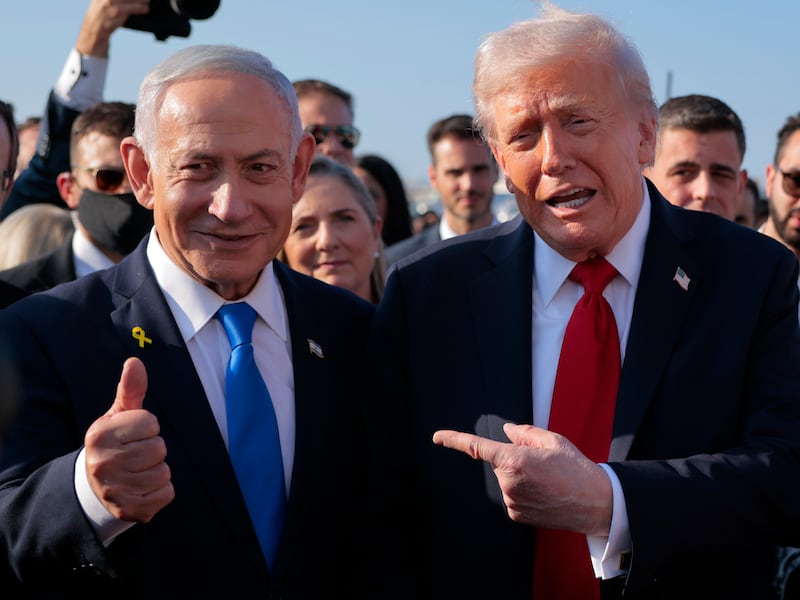
“Well, I’m not going to talk about military means. But what President Trump has said to me, ‘I want to go in there!’” Netanyahu replied. “And I think it can be done physically, that’s not the problem. If you have an agreement, and you go in and you take it out, why not? That’s the best way.”
“What if there isn’t an agreement? Can it be taken out by force?” the reporter asked.
“Well, you’re going to ask me these questions, I’m gonna dodge them, because I’m not going to talk about our military, um, possibilities, plans, or anything of the kind,” Netanyahu said.
Since the war began on Feb. 28, 13 American service members have died, and hundreds more have been wounded.
Thanks to the closure of the Strait of Hormuz—first by Iran, followed by a subsequent blockade of the waterway by the U.S. Navy—Americans have felt the war at home at the pump. The national average price per gallon of gas continues to climb toward $5, currently sitting at $4.52, according to AAA.